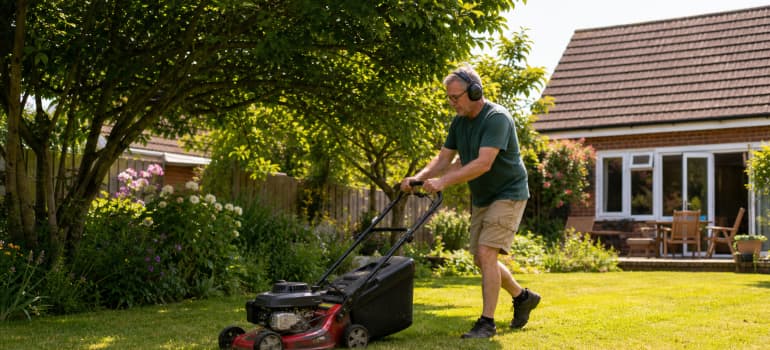
UK summers have become something else lately. What used to be a reliable stretch of mild warmth has turned into scorching weeks where the tarmac shimmers and your garden starts looking more like a doormat than a lawn. When temperatures climb like that, it’s tempting to carry on with your usual routine — mow on Sunday, water on Wednesday, job done. But heatwaves don’t play by the usual rules, and your lawn will feel every wrong move you make.
The question of whether you should mow the lawn in a heatwave trips up a lot of gardeners. It seems simple enough, but get it wrong, and you can turn a slightly stressed lawn into a genuinely damaged one that takes months to recover. The good news is that a few adjustments go a long way. Keep reading, and you’ll know exactly what to do and what to avoid when the heat is on.
TL;DR
- Mowing during a heatwave can stress your lawn — check visible signs before you reach for the mower.
- The best time to mow in hot weather is early morning or late afternoon, never midday.
- Keep grass slightly longer (around 3 inches) to shade the soil and hold onto moisture.
- Water deeply and infrequently to encourage roots to grow down rather than stay shallow.
- Cool-season grasses struggle more in heat; warm-season grasses are naturally more resilient.
- Browning, dry patches, and compacted soil are common heatwave problems with straightforward fixes.
- A professional lawn care service can help get your grass back on track if it’s really suffering.
Table of Contents
Should You Mow the Lawn During a Heatwave?
The short answer: NO. Mowing your lawn in a heatwave isn’t a good idea. If the grass is showing signs of heat stress — drooping, dulling in colour, or developing brown patches — leave the mower in the shed. Mowing already-stressed grass causes further damage and slows recovery.
Here’s the thing about grass in a heatwave: it’s already working hard just to survive. The roots are pulling moisture from deeper in the soil, growth slows right down, and the plant is doing everything it can to conserve energy. When you mow, you’re removing part of the leaf blade, which is where the grass photosynthesises and generates the energy it needs. Do that when the plant is already struggling, and you’re essentially kicking it while it’s down.
The key is to actually look at your lawn before you decide. If the grass springs back when you walk across it, that’s a decent sign it’s coping. If your footprints stay visible for a while, the lawn is dehydrated and stressed. That’s your cue to hold off. Browning tips and a slightly grey-green tint are also signs that the grass is under pressure. In those cases, skip the mow and focus on watering instead.
If the lawn still looks reasonably healthy and growth hasn’t stalled, a careful cut at the right height and time is fine.
What’s the Best Time to Mow in Hot Weather?
Mow in the early morning or late afternoon during a heatwave. Midday is the worst possible time — the sun is at its strongest, the soil is at its hottest, and freshly cut grass has no chance to recover before the heat peaks. Early morning and late afternoon give the grass time to adjust without being hit immediately by extreme temperatures.
Timing makes a real difference here. In the morning, the dew helps keep the grass slightly cool, and temperatures are still manageable. The lawn has had the whole night to rest, and it’s in the best shape it’ll be all day. One thing to watch: if the grass is soaking wet with dew, wait a little while for it to dry off slightly. Wet grass can clump under the mower, cut unevenly, and leave the lawn looking worse than before you started.
- Early morning (before 10am) — temperatures are lower, dew has softened the surface slightly, and the grass has the rest of the day to recover before nightfall.
- Late afternoon (after 6pm) — the sun is lower in the sky, heat intensity has dropped, and there’s still enough light for the grass to stabilise before dark.
Late afternoon works well too, especially on days when the morning is still uncomfortably warm. The logic is the same: you want to give the grass a window to recover without the sun bearing down on freshly cut blades.
What’s the Ideal Grass Length During a Heatwave?
Keep your grass around 3 inches (7–8cm) during a heatwave. Cutting it shorter than this exposes the soil to direct sun, speeds up moisture loss, and leaves the root system vulnerable. Longer grass shades the ground beneath it, helping the soil stay cooler and hold onto water for longer.
Most UK gardeners are used to keeping their lawns fairly neat and trim, which is fine most of the year. But a heatwave is the one time when letting things grow a little longer is genuinely the right call. Think of it like this: the grass blades act as a natural parasol for the soil. The taller they are, the more shade they cast, and the less moisture evaporates from the ground below.
How Should You Water the Lawn During a Heatwave?
Water deeply and infrequently rather than little and often. The goal is to push moisture several inches into the soil so roots follow it downward, where conditions are cooler and more stable. Frequent shallow watering keeps roots close to the surface — exactly where heat and evaporation are worst.
The instinct is to water more often because the soil looks dry. It’s understandable, but it tends to make things worse rather than better. Here’s what actually works:
- Water deeply but infrequently — a thorough soak once every few days does far more good than a brief sprinkle every evening; aim for moisture to penetrate several inches into the soil
- Water early in the morning — this gives moisture time to soak in before the heat of the day hits; evening is a reasonable second choice, but morning is better because water isn’t sitting on the surface overnight
- Check the soil before watering again — push a finger or a screwdriver a few inches into the ground; if it’s still moist, hold off; overwatering in hot weather can cause its own problems, including compaction and shallow rooting
It’s also worth knowing that a lawn going yellow or brown in a heatwave isn’t necessarily dying. Most grass varieties will go dormant when water is scarce, which is a natural survival response. It looks alarming, but the roots are often still alive. Once rain returns or you begin a proper watering routine, the lawn usually greens back up within a couple of weeks. Don’t panic and over-compensate with daily soaking — that can actually delay recovery.
Does Grass Type Affect How You Manage a Heatwave?
Yes, it makes a real difference. Cool-season grasses — which make up the vast majority of UK lawns — struggle significantly in high heat and need careful handling. Warm-season varieties are far more forgiving, though they’re still relatively uncommon in British gardens.
If you’ve got a standard UK lawn that was seeded or turfed with a typical blend, it’s almost certainly a cool-season mix. These lawns look great in spring and autumn but genuinely struggle when July turns relentless. The most important thing you can do for them is reduce stress — mow less, cut higher, and water thoughtfully rather than reflexively.
Fine fescue lawns, which are often found in shadier, drier gardens, can handle dry conditions slightly better than perennial ryegrass-heavy lawns. If your lawn recovers well after dry spells, you may have more fescue in the mix than you realise. Ryegrass-heavy lawns tend to be lusher and darker green but stress faster when water runs short.
What Should You Do If Your Lawn Is Already Damaged?
Stop mowing immediately, give the lawn a deep soak in the morning, and leave it alone. Repeated intervention on an already-stressed lawn compounds the damage. Patience is genuinely the most useful tool once things have gone wrong.
Here are the most common problems and what to do about each of them.
- Recognising heat stress is the first step. Classic signs include grass that stays flat after you walk on it, a dull grey-green colour, dry brown patches, and edges of the lawn drying out faster than the middle. If you spot these, stop mowing immediately. The lawn needs water and rest, not a trim. Give it a deep soak in the morning for a couple of days and see how it responds before making any decisions about cutting.
- If you’ve already cut the lawn too short, don’t make it worse by cutting again, trying to even things up. Leave it completely alone. Water it gently and consistently — but not obsessively — and give the grass a chance to grow back before you take the mower out again. Repeated cutting on a stressed lawn compounds the damage significantly. It’s frustrating, but patience is the right call.
- Compacted soil is another issue that gets worse in hot, dry weather. When soil is very hard, water sits on the surface and runs off rather than soaking in. You’ll notice this if water seems to pool briefly, then disappear without actually penetrating the lawn. The fix is aeration — pushing a garden fork or hollow-tine aerator into the soil to open it up. Wait until the worst of the heat has passed if you can, and always do it in the cooler part of the day. Aerating rock-hard soil in extreme heat is hard going and not particularly effective.
A professional lawn care service handles the kind of year-round maintenance that keeps grass in genuinely good condition — from scarifying and overseeding in autumn through to feeding and aerating in spring. That regular attention makes a real difference to how well a lawn holds up when conditions get tough.
Get expert help to restore your heatwave-stressed lawn
Enter your postcode to view our rates and availability in your area.
For questions about the services we offer visit our main site
Conclusion
A heatwave doesn’t have to mean a ruined lawn. The principles are actually pretty simple: mow less, cut higher, water deeply, and pay attention to what your grass is telling you. Whether you should mow the lawn in a heatwave comes down to one honest look at the lawn before you start, not a fixed schedule on the calendar.
Small adjustments make a big difference, and your lawn is more resilient than it looks during a tough summer. Give these strategies a go and allow the grass time to respond. If things aren’t improving or the lawn took a real battering, don’t be afraid to get professional help. Sometimes a fresh pair of eyes and a proper treatment plan is exactly what it takes.