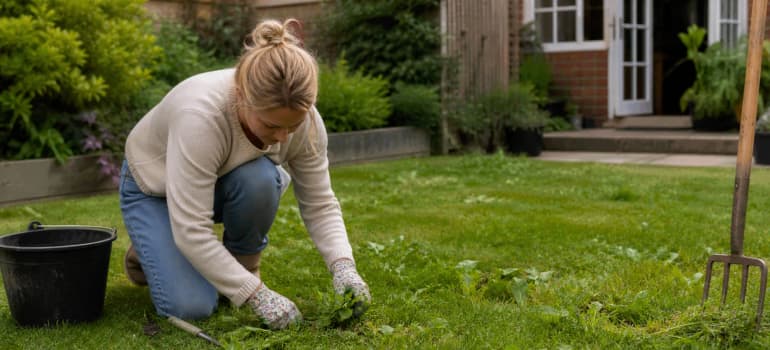



A hosepipe ban does not have to mean a summer of brown borders and wilting plants. You can usually continue watering with a bucket or watering can, while collected rainwater and carefully reused household water can help your supply go further.
Your lawn may not need as much help as you think, either. Established grass often turns brown because it has entered dormancy, not because it has died.
This guide explains what a hosepipe ban means, which plants to prioritise, how to use less water and what to do when restrictions end.
TL;DR
- Watering cans and buckets are legal everywhere, with every water company, filled straight from the tap.
- The ban only covers mains-fed hosepipes, sprinklers, irrigation systems and pressure washers, with fines of up to £1,000.
- Blue Badge holders and Priority Services Register customers are usually exempt, and new turf often gets a 28-day concession.
- Bath and washing-up water is fair game on lawns and borders when used within 24 hours and kept off anything eaten raw.
- Rainwater isn’t restricted at all, so a 45-gallon water butt becomes the garden’s private supply.
- Established grass can safely go brown: it’s dormant, not dead, and greens up within a few weeks of proper rain.
- Water pots, veg and new plantings first, early in the morning or in the evening, and mow no shorter than two inches.
What does a hosepipe ban mean for your garden?
A hosepipe ban is officially known as a Temporary Use Ban. Water companies introduce these restrictions during extended periods of dry weather, when water supplies are under pressure.
The restriction normally applies to water supplied through a hosepipe or equipment connected to one. This can include sprinklers, pressure washers and some irrigation systems.
Each water company publishes its own legal notice. The precise restrictions and exemptions may differ, so always check the information provided for your postcode before watering.
What are you not allowed to do during a hosepipe ban?
Depending on the wording of the ban, you may be prevented from using a hosepipe to:
- Water a lawn, garden or allotment;
- Wash a private vehicle;
- Clean windows, walls, paths or patios;
- Fill a paddling pool, swimming pool or hot tub;
- Fill or top up an ornamental fountain;
- Clean a private boat;
- Operate a sprinkler or mains-fed irrigation system.
Some activities may be permitted for health, safety, animal welfare or commercial reasons. Do not assume that an exemption applies without checking your supplier’s notice.
What happens if you break the rules?
Breaching a Temporary Use Ban can result in a fine of up to £1,000.
Water companies may initially focus on informing customers and encouraging compliance, but the restrictions are legally enforceable. Following them helps protect local water supplies during periods of high demand.
Can you use a watering can during a hosepipe ban?
Yes, you can generally water plants with a watering can or bucket during a hosepipe ban. Ofwat advises that these methods can still be used when hosepipes are restricted.
Fill the container from a tap and apply the water directly to the soil around each plant. This places the moisture where the roots can absorb it instead of wetting the leaves.
A rose attachment can help distribute water gently without disturbing dry soil. However, remove the rose when you need to water deeply around the base of a larger plant.
Watering an entire lawn this way is rarely practical. Pots, hanging baskets, vegetables and recently planted shrubs are more likely to benefit from the limited water you can carry.
Who may be exempt from a hosepipe ban?
Exemptions and concessions vary between water companies. Some are automatic, while others require the customer to register or apply.
Check your supplier’s website before using a hosepipe, even if you have previously qualified for an exemption.
Blue Badge holders and people with medical needs
Some water companies offer concessions to Blue Badge holders or customers whose disability or medical condition makes it difficult to carry a watering can.
Customers registered for priority services may also qualify in certain areas. Age or receipt of benefits alone does not necessarily provide an exemption.
Newly laid turf and recently planted areas
Some suppliers allow limited watering of newly laid turf or newly planted areas for a set period. Conditions may apply, such as restricting watering to certain times or requiring advance permission.
New turf is particularly vulnerable because its roots have not yet established in the soil. If your supplier does not offer a concession, delay laying turf until restrictions have ended.
Drip irrigation and soaker systems
Rules for drip irrigation systems differ. A supplier may permit an efficient system fitted with a timer or pressure-reducing device, while another may treat it in the same way as a sprinkler.
Check the technical requirements before switching the system on.
Businesses and animal welfare
Some commercial activities may continue when water is essential to the work being carried out. Separate provisions may also cover commercially grown crops and activities required for animal welfare.
For example, adding water to a pond may be allowed where it is necessary to protect fish. This does not necessarily mean that an ornamental pond without wildlife can be topped up.
How to water your garden without a hosepipe
When water is limited, deciding where to use it matters as much as the watering method.
Prioritise the plants that need water most
Start with the parts of the garden that dry out quickly or have shallow roots.
Water in roughly this order:
- Containers and hanging baskets;
- Recently planted trees, shrubs and hedges;
- Fruit and vegetables;
- Young plants and seedlings;
- Established borders;
- Established lawns.
Mature grass and well-established shrubs usually tolerate a dry spell better than pots or young plants.
Water early in the morning
The best time to water is usually early in the morning. Temperatures are lower, so less moisture is lost before it reaches the roots.
Evening watering is another option, particularly after the sun has moved away from the garden. Try not to leave plant foliage wet overnight, as prolonged damp conditions can encourage fungal problems.
Avoid watering during the hottest part of the day unless a plant is showing severe signs of stress.
Water deeply instead of little and often
A thorough soak encourages roots to travel deeper into the soil. Frequent light watering keeps them close to the surface, where the ground dries more quickly.
Pour slowly around the base of each plant. If the soil is very dry and water runs off the surface, apply a small amount first, wait for it to soak in and then water again.
Add mulch around your plants
Mulch helps the soil retain moisture and shields roots from high temperatures.
Spread approximately 5cm of compost, bark chippings or another suitable organic material over beds and containers. Leave a small gap around plant stems and tree trunks to reduce the risk of rot.
You can also move smaller pots into afternoon shade and group containers together to slow moisture loss.
Can you use bath water on the garden?
Water collected from baths, showers and washing-up bowls is known as grey water. It can be used temporarily on some parts of the garden, provided you handle it carefully.
Let hot water cool before use and apply it within 24 hours. Stored grey water can develop unpleasant smells and support bacterial growth.
Where can grey water be used?
Grey water containing small amounts of ordinary soap can generally be used occasionally on:
- Established lawns;
- Ornamental borders;
- Mature shrubs;
- Established trees.
Alternate it with fresh water or rainwater where possible so detergent residues do not accumulate in the soil.
When should you avoid using grey water?
Do not use water containing:
- Bleach;
- Disinfectant;
- Dishwasher detergent;
- Strong cleaning chemicals;
- Large amounts of salt or grease.
Keep grey water away from edible leaves, herbs and crops that will be eaten raw. Rainwater or fresh tap water in a watering can is a better choice for these plants.
Do not store grey water for later use. Collect only what you can safely distribute that day.
Want your lawn treated and looking its best?
Enter your postcode to view our rates and availability in your area.
For questions about the services we offer visit our main site
Can you use water from a water butt during a hosepipe ban?
A Temporary Use Ban normally applies to mains-supplied water. Rainwater collected in a water butt is therefore usually available for garden use, although you should still check the wording of your supplier’s notice.
A downpipe diverter directs roof water into the container. Fit a secure lid to keep out debris and reduce the risk posed to children and animals.
Place the butt on a stable stand so that a watering can fits beneath the tap. If one container is not enough, you can connect a second butt to collect the overflow.
Some suppliers permit a hosepipe or pump to be used with water from a butt because the water has not come from the mains. Confirm this before attaching any equipment.
Rainwater is particularly suitable for ericaceous plants such as blueberries, camellias and rhododendrons, which can be sensitive to hard tap water.
How do you keep grass alive without watering it?
Brown grass is not necessarily dead. During prolonged dry weather, established turf can enter dormancy. The leaves turn straw-coloured, while the roots and crowns remain alive below the surface.
Once sustained rain returns, a healthy lawn will often begin to recover without intensive intervention.
Raise your mowing height
Set the mower to leave the grass at least 5cm high and cut less frequently during hot, dry weather.
Longer grass shades the soil and encourages deeper roots. Cutting too short exposes the ground to heat and places additional stress on the turf.
Keep the mower blade sharp as well. A blunt blade tears dry grass instead of cutting it cleanly.
Stop feeding the lawn
Do not apply fertiliser to a dry or dormant lawn unless the product instructions specifically state that it is suitable.
Fertiliser encourages new growth when the grass is trying to conserve resources. Some treatments can also scorch drought-stressed turf when there is not enough water to wash them into the soil.
Wait until conditions become cooler and wetter.
Reduce traffic over dry grass
Dormant grass is brittle and can be damaged by repeated foot traffic. Soil also becomes more compacted when the same areas are used frequently.
Move furniture and games onto hard surfaces where possible. Giving the lawn a quieter few weeks can make its eventual recovery easier.
How do you revive a lawn after a hosepipe ban?
Do not begin major repair work as soon as the restriction ends. First, allow the lawn to receive regular water or rainfall and see which areas recover naturally.
Check whether the grass is dormant or dead
Take hold of a small patch and pull it gently.
Dormant grass should remain anchored and may show pale green or white tissue near its base. Dead grass comes away easily, with dry roots and no sign of living growth.
Many lawns start to regain colour within several weeks of regular rainfall.
Rake and aerate the damaged areas
Once the ground is moist enough to work, rake out dead grass and excess thatch.
Spike compacted areas with a garden fork or use a lawn aerator. This helps air and water move into the root zone and improves the conditions for new growth.
Overseed thin or bare patches
Early autumn is usually a suitable time to overseed because the soil remains warm while rainfall becomes more reliable.
Choose a seed mixture suited to your garden. Hard fescues can improve drought tolerance, while perennial ryegrass is useful where the lawn receives regular foot traffic.
Keep newly seeded areas consistently moist while they establish, provided no restrictions prevent you from doing so.
Apply an autumn lawn feed
When active growth resumes, an autumn fertiliser can help strengthen the turf before winter. Choose a product with lower nitrogen and higher potassium than a typical spring feed.
Follow the application rate carefully. Adding more fertiliser than recommended will not speed recovery and may damage the grass.
Returf severely damaged areas
Where the grass has died completely, returfing may be more effective than overseeding.
Autumn provides favourable conditions because the soil is warm and natural rainfall reduces the amount of watering required. Avoid laying new turf during a hosepipe ban unless your supplier clearly permits the necessary watering.
Does your lawn need more than a watering can?
A professional gardener can assess whether the grass is dormant or dead, aerate compacted ground and overseed bare areas. Fantastic Gardeners can also create a seasonal lawn-care plan to help the turf cope better with future dry spells.
Takeaways
- A hosepipe ban restricts specified uses of a hosepipe, sprinkler and similar equipment;
- You can generally continue watering with a bucket or watering can;
- Exemptions vary, so check the legal notice published by your water supplier;
- Prioritise pots, young plants, fruit and vegetables over established grass;
- Water deeply in the morning and use mulch to reduce moisture loss;
- Rainwater and carefully selected grey water can help reduce demand for mains water;
- Brown summer grass is often dormant rather than dead;
- Raise the mowing height, stop feeding and reduce traffic during drought;
- Wait for wetter conditions before aerating, overseeding or returfing damaged areas.
Want your lawn treated and looking its best?
Enter your postcode to view our rates and availability in your area.
For questions about the services we offer visit our main site