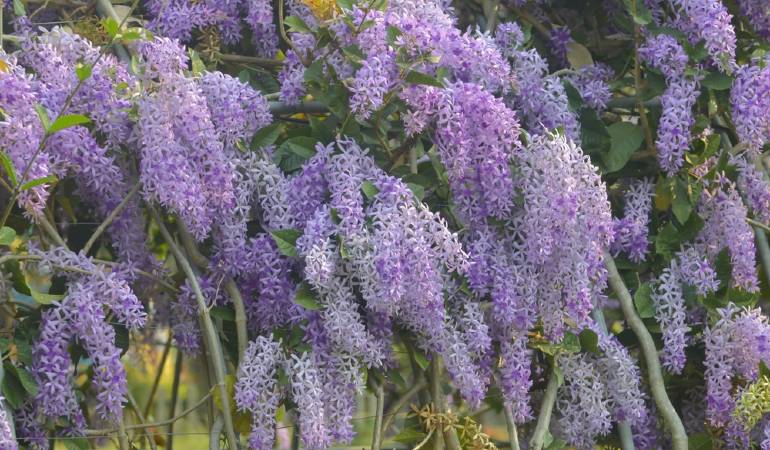
Wisteria is one of those plants that makes people stop and just stare. Those long, drooping clusters of purple or white flowers tumbling over a wall or pergola look almost theatrical. It’s no surprise it’s become a staple in UK gardens. But here’s what most people don’t realise until it’s too late: wisteria is not a plant you can leave to its own devices. Without knowing how to prune wisteria properly, what starts as something beautiful can quickly turn into a tangled, woody monster that flowers once every few years and takes over everything nearby.
Pruning isn’t optional with wisteria. It’s the difference between a showstopper and a headache. Whether yours is growing up a wall, along a fence, or sitting in a pot on the patio, getting the pruning right changes everything.
Table of Contents
Why Does Wisteria Need Pruning?
Wisteria needs pruning because it grows aggressively and, without regular cutting back, it prioritises leafy stems over flowers. Correct pruning redirects the plant’s energy into producing flowering spurs. Skip it and you’ll end up with a plant that looks impressive in the wrong way: huge, unruly, and barely blooming.
Left alone, wisteria will find gaps in guttering, push under roof tiles, and wrap itself around anything it can reach. That’s not dramatic exaggeration. It’s just what the plant does. Pruning keeps it in check and, more importantly, it actually tells the plant to focus its energy on producing flowers rather than endless leafy shoots.
Here’s what consistent, correct pruning does for your wisteria:
- Increased flowering: Cutting back shoots encourages the development of flowering spurs. More spurs mean more blooms.
- Controlled size: Without pruning, wisteria can reach 30 metres or more. Regular cuts keep it manageable.
- Better plant health: Removing excess growth improves airflow through the canopy, reducing the risk of fungal issues.
- Cleaner structure: A well-pruned wisteria looks intentional and elegant. An unpruned one looks like something escaped from a garden centre years ago and never came back.
Prune it properly and it thrives. Ignore it and you’ll spend years wondering why it barely flowers.
What Tools and Timing Do You Need for Wisteria Pruning?
You need sharp secateurs for new growth, loppers for thicker stems, and a small pruning saw for old woody sections. Timing follows a two-session schedule: summer pruning in July or August, and winter pruning in January or February. Both sessions are essential. Skipping either one affects your results.
Before you touch the plant, make sure you have the right tools. Using blunt or oversized equipment on delicate new growth is a fast way to cause damage you didn’t intend. Using small pruning shears on thick, woody stems just makes the job harder and messier.
Here’s what you’ll want to hand:
- Pruning shears (secateurs): For new, thin shoots. These should be your most-used tool, especially in summer.
- Loppers: For thicker stems that secateurs won’t cut cleanly through. The longer handles give you leverage and reach.
- A small pruning saw: For older, woody growth that needs removing entirely.
- Gloves: Wisteria sap can irritate skin. Sturdy gloves are worth wearing.
Keep your tools clean and sharp. Blunt blades crush stems rather than cutting them, which stresses the plant and creates entry points for disease. It takes seconds to sharpen before you start. An injury to your plant, or your hands, takes much longer to recover from.
Each pruning session in the two-session schedule serves a different purpose. Summer pruning manages new growth and lets more light into the canopy. Winter pruning drives the flowering. Both matter equally.
How Do You Prune Wisteria Step by Step?
Pruning wisteria splits into two main sessions: summer and winter. In summer, cut new shoots back to five or six leaves. In winter, cut those same shoots back further to two or three buds. That two-step process, repeated every year, is what keeps a wisteria flowering reliably and looking structured rather than chaotic.
There’s no mystery to it once you understand what you’re aiming for at each stage. Follow these steps and you’ll stay on top of it without it ever becoming overwhelming.
- Identify branches for cutting. Before you make a single cut, stand back and look at the plant. Identify which shoots are new growth, which are the established framework branches you want to keep, and which are old, unproductive stems just taking up space.
- Use the right tools for different branch sizes. New, whippy shoots get secateurs. Thicker stems need loppers. Anything older and woody needs a saw. Don’t force the wrong tool. It never ends well.
- Shape for airflow and light. As you prune, think about the overall shape. You want an open structure that lets light reach the inner branches. That light is what drives flowering. Don’t let the centre become a dense tangle.
Summer Pruning Techniques
Summer pruning is all about managing the new shoots that have appeared since spring. By July or August, wisteria will have sent out long, whippy green stems in all directions. These are the ones you’re cutting back now.
Count five or six leaves along each new shoot and cut just above the fifth or sixth leaf. That’s really all there is to it, but the effect is significant. Cutting back to this point removes the excess leafy growth, lets more light into the canopy, and encourages the plant to start forming flower buds lower down the stem for next year.
Don’t worry about being too neat at this stage. You’re essentially giving the plant a firm haircut. It responds well to it. The only shoots you leave alone are any you’ve deliberately trained along a new section of framework that you’re trying to extend.
Winter Pruning Techniques
Winter pruning is the one that really drives flowering. In January or February, go back to those same shoots you trimmed in summer. By now they’ll look stubby and bare, and you can see the fat, rounded flower buds forming along them.
Cut each one back further, leaving just two or three buds on each spur. Those buds are where your flowers will come from in spring. The harder you cut back, the more energy the plant concentrates into each remaining bud. That means bigger, better flower clusters.
Winter is also the time to deal with any stems that have grown where you don’t want them, remove anything crossing another branch awkwardly, or cut out sections that look dead or diseased. With the leaves gone, the whole structure is clear and it’s much easier to see what needs doing.
Pruning Wisteria in Pots: Special Tips
Growing wisteria in a pot is completely doable, but it comes with a few extra challenges that open-ground plants don’t face. The main one is root space. In the ground, wisteria can spread its roots widely in search of water and nutrients. In a pot, it’s working with what it’s got.
Here’s what to keep in mind for potted wisteria:
- Pot size matters: Use the largest pot you can manage. A container that’s too small will cause the plant to become root-bound quickly, which stunts growth and reduces flowering.
- Soil quality: Use a good quality, loam-based compost and refresh it every couple of years. Nutrients deplete faster in containers than in garden beds.
- Prune more regularly: Potted wisteria grows vigorously despite the restricted roots and can quickly look messy. The same summer and winter pruning schedule applies, but keep a closer eye through the season and trim back anything heading in the wrong direction.
- Check for root-bound symptoms: If roots are circling the base of the pot or pushing out of drainage holes, it’s time to repot into something larger. A root-bound plant won’t flower well, no matter how well you prune the top growth.
- Watering: Pots dry out much faster than open ground, particularly in summer. Consistent watering is essential. Let the compost dry slightly between waterings but never let it dry out completely.
Potted wisteria rewards attention. Check it regularly, stay on top of the pruning, and it’ll flower reliably even in a relatively small space.
What Are the Most Common Wisteria Pruning Mistakes?
The most common wisteria pruning mistakes are pruning at the wrong time of year, cutting too aggressively without understanding the structure, and neglecting the older woody framework. Each of these errors can reduce flowering significantly, sometimes for multiple seasons, so it’s worth knowing exactly what to avoid.
Here’s a clear breakdown of what goes wrong and how to fix it:
- Pruning at the wrong time: Cutting the plant back in spring removes the flower buds that formed over winter. Stick to summer and winter only. Mark the dates in your calendar so you don’t forget.
- Cutting too much at once: Removing large amounts of old wood in one go can shock the plant and trigger excessive leafy regrowth at the expense of flowers. Tackle heavy renovation work gradually over two or three seasons rather than all at once.
- Ignoring older wood: Older stems can become thick and unproductive if left untouched for years. They take up space without contributing to flowering. Each winter, assess whether any old framework stems need replacing with younger, more productive growth.
- Not cutting back far enough in winter: Leaving shoots too long means fewer flower buds form. Be firm. Cut back to two or three buds as the guidance says.
- Using blunt tools: Crushed stems get infected. Sharpen or replace tools before the pruning season starts.
If your wisteria has been neglected for years and you’re not sure where to start, it’s genuinely worth getting a professional to help. A hedge and shrub pruning service can assess the structure properly and help you avoid making a costly mistake on a mature plant.
Does Pruning Actually Improve Wisteria Flowering?
Yes, pruning is the single biggest factor in wisteria flowering. Cutting back correctly in both summer and winter tells the plant to concentrate its energy into flower buds rather than leafy growth. Combine that with an open structure, the right feed, and consistent watering, and you’ll have a plant that flowers reliably every year rather than putting on a show every three years if you’re lucky.
Keeping an open structure is key. When you prune, always aim to maintain clear space through the centre of the plant. Light reaching the inner branches stimulates flowering. Dense, congested growth does the opposite. Every cut you make should be asking: does this let more light in?
Feeding helps too. Wisteria benefits from a high-potassium feed in spring, just as the buds start to swell. A feed high in nitrogen encourages leafy growth instead of flowers, so avoid that. Think of it the same way you’d feed a tomato plant: you want fruiting, not foliage.
Watering consistently through the growing season supports all of this. Drought stress causes flower buds to drop before they open. That’s a frustrating result after a good winter pruning session. Keep the roots moist, especially during dry spells.
Good pruning starts the process. The right feed and water finish the job.
Book a Gardening Expert Today! Transform Your Garden with Fantastic Services
Enter your postcode to view our rates and availability in your area.
For questions about the services we offer visit our main site
Takeaways
- Prune wisteria twice a year: in summer (July or August) and in winter (January or February). Both sessions matter.
- Use the right tools for the job and keep them sharp. Secateurs for new growth, loppers for thicker stems, a saw for old wood.
- In summer, cut new shoots back to five or six leaves. In winter, cut back to two or three buds to drive spring flowering.
- Potted wisteria needs extra attention: the right pot size, good compost, consistent watering, and regular root checks.
- Avoid the common mistakes: wrong timing, cutting too hard in one go, ignoring older stems, and using blunt tools.
- An open structure, correct feeding, and consistent watering all support what good pruning starts.
- When in doubt about a neglected or complex plant, get professional advice rather than guessing.