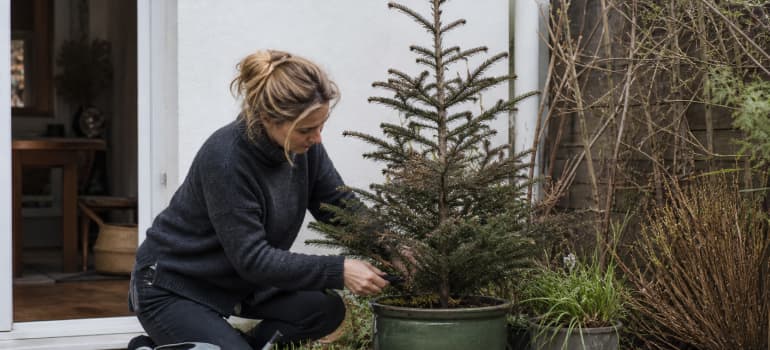
There’s something genuinely lovely about a potted Christmas tree. Unlike a cut one, it feels like a living guest in the house, something you can care for and, with any luck, plant out in the garden come January. But sometimes things don’t go to plan. You notice needles starting to turn, a branch drooping, a general look of “I’d really rather not be here.” It’s disheartening, especially when you’ve gone to the trouble of choosing a living tree in the first place.
The good news is that a struggling potted Christmas tree isn’t necessarily a lost cause. Catch the problem early, understand what’s causing it, and most trees can be brought back. This guide covers exactly that.
TL;DR
- Browning needles, drooping branches, and excessive needle drop are the key warning signs that your potted Christmas tree is struggling.
- Watering incorrectly, either too much or too little, is the most common reason potted trees decline indoors.
- Central heating is one of the biggest threats to a living tree indoors. Keep it well away from radiators and heat sources.
- Check the roots and soil before anything else. Compacted or waterlogged compost can quietly kill a tree from the bottom up.
- Most potted Christmas trees are only suited to short indoor spells of around 10–12 days at a time before needing a break outside.
- Trimming dead branches and adjusting care habits can genuinely bring a distressed tree back to full health.
- Catching problems early dramatically improves your chances of saving the tree and planting it out successfully after the festive season.
Table of Contents
What Are the Signs of a Dying Potted Christmas Tree?
The main signs are browning or yellowing needles, drooping branches, heavy needle drop, and a general dull, lifeless appearance. These symptoms can appear within days of bringing the tree indoors if conditions aren’t right, so it pays to know what you’re looking for from the start.
Potted trees are tough in their natural habitat, but pop one inside a centrally heated living room and suddenly it’s dealing with conditions it never evolved for. Low humidity, inconsistent watering, poor light, and temperature swings can all take a toll surprisingly quickly. The tree won’t tell you it’s unhappy until the symptoms are already visible.
Here are the main signs your tree is under stress:
- Browning needles, needles turning yellow, orange, or brown, particularly towards the inner branches or tips, can indicate heat stress, underwatering, or a root problem
- Wilting or drooping branches, branches that lose their structure and sag downward suggest the tree is dehydrated or its roots aren’t functioning properly
- Excessive needle loss, a few needles dropping is perfectly normal; a carpet forming under the pot daily is not. Heavy needle shed often points to heat, drought stress, or root damage
- General lack of vigour, if the tree looks dull, flat, and lifeless despite regular watering, it may be struggling with compacted soil, poor drainage, or nutrient depletion
One thing worth knowing: some degree of needle browning on inner, older growth is natural, especially in winter. It’s the widespread or rapid browning that should ring alarm bells. If in doubt, run your fingers along a branch. If needles fall at the lightest touch, act quickly.
How Do You Revive a Dying Potted Christmas Tree?
Start by fixing the most likely causes first, watering, heat, and drainage, before going near the roots. Most trees showing early signs of distress can be turned around with a few targeted changes. Work through these steps in order rather than doing everything at once.
Follow these steps to diagnose and revive a dying potted Christmas tree, working from the most common causes through to root and structural care.
Check your watering habits
Push a finger into the compost about 2–3 cm deep. It should feel just slightly damp, not bone dry or soggy. Overwatering is just as damaging as underwatering. If the soil is waterlogged, hold off watering and check that the pot has adequate drainage holes. If it’s very dry, water slowly and deeply until it drains through the base.
Move the tree away from heat sources
Central heating is arguably the single biggest threat to a potted Christmas tree indoors. Radiators, fireplaces, and even south-facing windows that get intense afternoon sun can raise temperatures around the tree well beyond what it tolerates. Move it to a cooler spot with bright, indirect light. Temperatures between 10–15°C are ideal if you can manage it.
Examine the soil and improve drainage
Tip the tree carefully out of its outer decorative pot if it has one, and check whether water is pooling at the base. Compacted compost around the roots will stop water and air reaching where they’re needed. If the soil feels hydrophobic, water beads on the surface rather than soaking in, break it up gently with a stick or chopstick before watering.
Inspect the roots and address any damage
Lift the root ball carefully and look for signs of root rot: soft, dark, or mushy roots with an unpleasant smell. Healthy roots are firm and pale. Use clean scissors or secateurs to trim away any clearly rotten roots. If root rot is extensive, the tree’s chances are slim, but removing the worst of it and repotting into fresh compost can sometimes turn things around.
Remove dead or damaged branches
Trim back any branches that are completely brown, brittle, or clearly dead. This isn’t just cosmetic. Removing dead growth stops the tree wasting energy on tissue it can’t recover, and encourages it to put that effort into healthy growth instead. Use clean, sharp secateurs and cut just above a healthy bud or branch junction where possible.
How Do You Keep a Potted Christmas Tree Healthy Indoors?
Once you’ve addressed the immediate problems, keeping your tree in good shape is really about consistency. Nothing fancy, just steady attention to a few key things that most people either overlook or get slightly wrong.
- Water regularly, but don’t overdo it. The compost should stay lightly moist throughout the time the tree is indoors. A small amount every couple of days is usually enough, though this varies with pot size and how warm your home is. Don’t let the pot sit in a saucer of standing water, that’s a fast track to root rot. Equally, don’t let the compost dry out completely between waterings. If the surface feels dry to the touch, it’s time.
- Light matters more than most people realise. Potted Christmas trees need decent light to stay healthy indoors. A bright spot near a window works well, as long as it’s not directly above a radiator or in a draughty hallway. Rotating the pot every few days ensures all sides of the tree get even light, which helps prevent one-sided browning and keeps the shape looking decent.
- Use the right compost. If you’re repotting or topping up, use a mix formulated for ericaceous plants or evergreen trees. Most Christmas tree species, including Norway spruce, Nordmann fir, and blue spruce, prefer slightly acidic, free-draining soil. Standard multipurpose compost can work in a pinch, but a more tailored mix gives the tree a better foundation.
- Limit its time indoors. This is perhaps the single most useful piece of advice that tends to get buried. Potted Christmas trees aren’t designed to live in a house indefinitely. Most species cope with around 10–12 days inside before they start to suffer from the warmth, low humidity, and reduced light. If you can put the tree outside in a sheltered spot between uses, even for a few weeks before and after Christmas, it’ll be in far better shape come January.
- Check it every couple of days. While it’s indoors, keep an eye on needle colour, needle drop, and any new drooping. Catching problems early is the difference between a small tweak to your care routine and a full-scale rescue operation.
If you’d rather start the season with a healthy, well-sourced tree than spend December nursing a struggling one, a professional Christmas tree delivery and installation service takes care of sourcing, delivery, and setup, so you get exactly what you need from day one.
Frequently Asked Questions
Is it normal for a potted Christmas tree to shed needles?
Some needle shed is entirely normal, particularly from older inner growth. The concern is when needles are dropping from the tips of branches, falling in large quantities daily, or when the tree looks sparse overall. That level of shedding usually points to environmental stress, most commonly heat or inconsistent watering. Reducing indoor time and improving conditions should slow the drop significantly.
Can I bring my potted Christmas tree indoors permanently?
No, and it’s worth being upfront about this. Potted Christmas trees are outdoor plants. They need cold winters to rest and recover, and they can’t sustain healthy growth in the warm, dry conditions of a house long-term. You can bring them in for short festive spells, ideally no more than 10–12 days at a time, but they need to live outside for the majority of the year to stay viable.
How do I know if my potted tree needs repotting?
A few clues tell you it’s time. If roots are visibly circling the base of the pot or growing out of the drainage holes, the tree has outgrown its container. If the compost dries out very rapidly after watering, or if the tree seems to have stalled in growth despite good care, repotting into a container one size larger with fresh compost will usually help. Spring is the best time to repot, after the tree has had a chance to recover from its indoor spell.
Get a healthy potted Christmas tree delivered and set up this festive season
Enter your postcode to view our rates and availability in your area.
For questions about the services we offer visit our main site
Conclusion
Knowing how to revive a dying potted Christmas tree is mostly about acting quickly and getting the basics right, watering correctly, moving it away from heat, sorting out the soil and roots, and trimming back dead growth. None of it is complicated, but all of it matters. The sooner you respond to the warning signs, the better the odds of pulling the tree through.
A potted Christmas tree, cared for properly, has a life well beyond December. With a bit of attention now and a spot in the garden waiting for it in spring, this year’s festive centrepiece could be growing in your garden for years to come. That’s worth looking after.