What happened to your fence? It was fine yesterday, and today it’s leaning on one side. Was there a rough storm last night, or is it just very old?
Whatever the case may be, you need to sort it out fast. A wonky fence means less privacy, weaker security, and a garden that looks a bit sad. Eventually, the fence might even fall.
Fortunately, this guide will walk you through the entire process of fixing a leaning fence with clear, simple steps.
Let’s find out first…
Table of Contents
What makes fences lean?
As mentioned a second ago, when a fence leans, it’s often after a rough storm. Strong winds push the posts about. As a result, panels twist or warp, and small gaps appear where the boards no longer meet neatly. Over time, these little shifts add up and make the lean more noticeable. Soil can shift after heavy rain or a hard frost, too. And when the ground moves, the posts move with it.
Old age also takes its toll. Wood dries out, cracks, or rots at the base. Metal posts, on the other hand, may rust. Sometimes, a bad start can also be the reason. A bad installation job where the posts are not set deep enough or the supports are too weak, will lead to a leaning fence.
The type of fence also influences how and why it leans.
Let’s look into wooden fences first. Some timber copes better with the weather than others. Softwoods soak up water, swell, then shrink again in the heat. This makes them warp after long wet spells or hot summers. Hardwoods hold up better, but even they struggle if the base stays wet for too long.
Metal fences, on the other hand, stand firm for years, but rust can eat into the base. Once the base weakens, the whole fence leans. You may need new brackets or a full post swap if the rot goes deep.
Concrete or brick walls are quite solid, yet cracks in the base or loose footings could cause a slow lean. Fixes take more effort, but the wall lasts ages once you sort the root cause.
In the UK, the weather plays a big part. Coastal areas get stronger winds, so fences tilt faster there. Long wet seasons also soften soil, so posts slip more often.
What to do if your fence is leaning?
Now let’s explore how to effectively fix that leaning fence, so you don’t have to worry about it again.
Inspect the damage
Start with the posts. Give each one a gentle push. Do they move or wobble? Check for rot at the base or along the post. Even small signs of decay can make the fence weak.
Next, look at the horizontal supports. Wooden rails can warp or split. Metal rails can bend or crack. If the supports are damaged, the panels won’t stay straight even if the posts are fine.
Don’t forget the fastenings. Nails, screws, and brackets loosen over time. A fence panel can sag if it’s only held by a few rusty nails. Check each connection to see if anything is loose or broken.
Once you’ve done a full inspection, it’s time to judge how serious the problem is.
- Minor lean – When the post moves slightly but the structure is mostly sound. You can usually repair this when you reinforce the posts and realign the panels.
- Major structural failure – In this case, the posts are rotten, the metal is bent, or the concrete is cracked. You might need to replace posts or the entire fence.
Replace any loose or damaged panels
When a panel is too far gone to save, it’s best you remove it. This is how to take off the panels or boards attached to the post.
- Undo the nails, screws, or brackets that hold each panel in place.
- Lift the panels away one by one and set them aside.
- Wooden panels – Lay them flat on the ground. This keeps them from bowing or splitting.
- Vinyl panels – These can warp if they bend the wrong way, so lean them gently against a wall or another fence.
- Metal panels – They’re sturdier, so they won’t warp like vinyl, but they can still scratch, dent, or chip paint if dropped. Lean them securely so they don’t topple over.
- If your fence has matching sections, label or number them. It makes putting everything back much easier.
It’s usually safer and easier when you remove the panels, especially for wooden or vinyl fences. For sturdy metal panels, it’s optional.
Temporarily support the fence with braces or stakes
This step prevents the post from falling while you reinforce it.
- Loosen the soil around the base of the leaning post. Dig carefully so you can adjust the post without breaking it. When you remove some soil, it lets you reposition the post straight in the ground.
- Use a spirit level to check that the post is perfectly vertical. Take your time and adjust until the bubble sits in the centre.
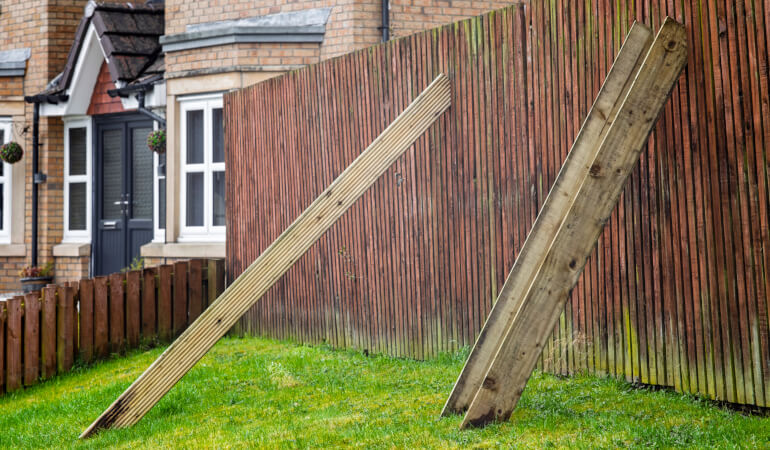
- Next, support the post temporarily. You can use wooden braces or stakes driven into the ground at an angle. Tie the post to the braces with a string or rope. Make sure the tension is firm enough to hold it. You can also use adjustable clamps or even extra panels leaned carefully to hold it upright if stakes aren’t handy.
This solid temporary support keeps the post stable while you add concrete, gravel, or brackets.
Reinforcing posts
One of the most common ways to do this is to fill the hole with concrete or gravel.
If you decide to go with concrete, mix it according to the instructions. Pour it around the base of the post and tamp it down to remove air pockets. Check with a spirit level that the post stays straight as the concrete sets.
Gravel is another option if you have wooden posts. It lets water drain better than concrete. This helps wooden posts last longer. You just add a layer of gravel at the bottom, then backfill with soil. Compact it well to prevent the post from shifting. That’s it.
Sometimes, however, you might need something extra in the form of post supports or brackets.
You will need them if your soil is soft or sandy. When it’s like that, it washes away easily and makes posts lean. You can also benefit from these if you live in a very windy area where gusts can push panels around.
Big, heavy posts or ones holding large panels benefit from extra support too. Even a post that wobbles slightly or shows minor weakness can stay straight with a bracket.
How do you fix a leaning fence post without concrete?
For wooden posts, pack the hole tightly with gravel or compacted soil. You can also add a few bricks around the base for extra support. Tie the post to temporary braces until the soil settles fully.
For vinyl or panel fences, you can reinforce a fence panel with brackets or metal braces to secure the post. Even a wobbly post can be stabilised with stakes and straps until the ground firms up.
Reinstall panels or boards
Once the posts are reinforced and solid, it’s time to put the panels back.
- Position each panel against its post. Make sure it sits at the correct height and lines up with the neighbouring panels. A spirit level can help keep everything straight.
- Secure the panels with nails, screws, or brackets. For wooden fences, screws work best as they hold panels tighter and are easier to replace later if needed. Vinyl or metal panels often use clips or brackets, so check the manufacturer’s instructions.
Loose panels can make the fence wobble again, even if the posts are strong, so attach each panel firmly.
Treat the fence for stability
You already know that wooden fences are prone to rot, warping, and weather damage, so you’d best treat them.
Clean the wood from dirt, moss, or old flaking paint with a stiff brush. Then apply a wood preservative or treatment. Make sure you cover the posts, panels, and any edges that touch the soil.
Next, consider painting or staining the fence. A good coat seals the wood. Lighter colours reflect sunlight and reduce warping, while darker stains hide minor imperfections. Decide which is more important for you.
There is also a very popular DIY trick where people put coffee cans on their wooden fence posts. It serves as a protective cap to divert water away from the vulnerable end grain of the wood.
No luck fixing that fence? Perhaps it’s time to call in the professionals
Sometimes, no matter how careful you are, a leaning fence just won’t stay put. You know you need a professional repairman when:
- Posts or panels are rotten, cracked, or bent beyond repair.
- The fence leans over a long stretch or has panels bowing badly; it’s not just one post.
- Your fence sits on a boundary with a neighbour; there could be legal considerations. Professionals know how to deal with shared boundaries and local regulations safely.
Many people wonder: “How much does it cost to fix a leaning fence?”… Here is a quick summary; keep in mind that these prices are just exemplary.
Fence repair costs in the UK range from £100 to £300. Labour costs £20-£40 per hour, taking 2-4 hours. Wooden fences are more affordable; metal and concrete are more expensive.
Three main factors affect the final repair price: fence size, damage extent, and material type. Wood is easier to repair, while concrete most labour-intensive. Location also matters, with hard-to-reach areas adding to costs.
How to prevent your fence from destabilising in the future
A few simple steps can keep your fence upright and strong for years.
- Check soil and drainage. Soft or waterlogged soil makes posts shift. Make sure the ground drains well and avoid planting water-loving plants near post bases.
- Use durable materials. Treated wood, vinyl, or metal resists rot, rust, and warping. Choosing strong materials from the start makes a big difference.
- Do regular inspections. Walk along your fence every few months. Look for wobbly posts, sagging panels, or signs of rot. Spotting problems early keeps repairs simple.
- Treat wooden fences. Paint, stain, or seal your timber regularly. This protects against moisture, slows rot, and preserves the fence’s strength.
- Secure fastenings. Check screws, nails, and brackets. Tighten anything loose so panels don’t sag or shift.
- For fences on slopes or in windy areas, use braces or brackets when you install posts. They give extra support and reduce movement over time.
- Avoid leaning heavy objects. Bikes, tools, or garden equipment can push posts out of line.
Are you fed up with your fence? Then schedule fence installation and repair services
Enter your postcode to view our rates and availability in your area.
For questions about the services we offer visit our main site
Takeaways
- Fences lean due to rough storms, but sometimes old age is also a reason.
- Check your fence after a heavy storm.
- You can strengthen your fence posts with concrete or gravel.
- If you have soft soil or live in a windy area, use post supports or brackets.
- Treat your wooden fence panels to make them last longer.