Most people mow the lawn, pack the mower away, and don’t give the blades a second thought until something looks off. Sound familiar? The thing is, blade sharpness is one of those basics that separates a genuinely healthy lawn from one that just about gets by.
Blunt blades don’t just make your lawn look rough. They tear the grass, leave it open to disease, and force your mower to work harder than it needs to. Not ideal for the machine or the turf.
Sharp blades are one of the simplest things you can get right, and yet they’re almost universally neglected. This guide covers everything: how often to sharpen lawn mower blades, how to spot when it’s overdue and how to do it yourself safely.
Table of Contents
So, How Often Should You Actually Sharpen the Lawn Mower Blades?
You should sharpen your lawn mower blades every 20 to 25 hours of use. For most UK homeowners, mowing once a week during the growing season, that works out to sharpening two to three times per year. If you mow large areas frequently, or your lawn has tough grass types or hidden debris, aim for the shorter end of that range.
That’s the simple answer. Here’s the fuller picture.
The 20 to 25-hour figure is a solid benchmark, but it assumes average conditions on a reasonably clean, well-maintained lawn. Real gardens vary a lot. A small suburban front garden with soft fescue grass, mown once a week, will put far less wear on blades than a large country garden with ryegrass, occasional stones, and tree roots near the surface.
A sensible approach is to combine a schedule with visual checks. Use the 20 to 25-hour rule as your baseline. Add a quick inspection at the start of each mowing season and again at the halfway point. If the signs of dullness appear before your scheduled sharpening, don’t wait. Act on what you see.
At the absolute minimum, sharpen at least once per year, always before the first cut of the season in spring. Sending a mower out on the season’s first run with blades that have been sitting blunt since October does nobody any favours.
How Can You Tell When Your Mower Blades Need Sharpening?
Your lawn will usually tell you before the blades do. Once you know what to look for, it’s pretty obvious. Here are the key signs to watch for:
- Torn or ragged grass tips: Bend down after mowing and look at the cut edges. Clean cuts look even and smooth. Blunt blade cuts look shredded or frayed. If the tips look like they’ve been pulled rather than sliced, it’s time to sharpen.
- Uneven cut height: Patches of grass that look taller than the surrounding area, despite mowing in a consistent pattern, often point to blades that aren’t cutting efficiently across their full length.
- Yellowing or browning tips shortly after mowing: That straw-coloured tinge across the top of the lawn within a day or two of cutting is a classic giveaway. The torn tissue dries out and discolours.
- Increased mower vibration: Blunt blades create more resistance as they drag through grass. That extra load often causes noticeable vibration. If your mower suddenly feels rougher to push or control, check the blades.
- The mower pulling or dragging: If the mower feels like it’s working harder than usual, or struggling through medium-length grass it would normally handle easily, blunt blades are a likely culprit.
- Visible nicks or dents on the blade edge: After removing the blade safely, run your eye along the cutting edge. Nicks, dents, or flat spots from hitting stones or roots need to be filed out before a proper edge can be restored.
Step-by-Step Guide to Sharpening Lawn Mower Blades at Home
It’s not a complicated job. A bit fiddly the first time, but once you’ve done it, it becomes routine. Follow these steps carefully.
Step 1: Safety First
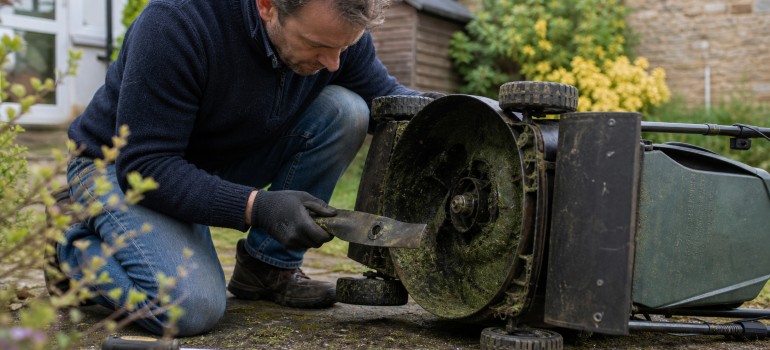
Before you touch anything, disconnect the spark plug lead on a petrol mower, or remove the battery on a cordless electric model. This isn’t optional. An accidental engine start while your hands are near the blade is the kind of thing that changes your life permanently.
Wear thick gloves throughout. Mower blades are heavy, awkward, and have edges that can still cut even when blunt. Tip the mower on its side with the air filter and carburettor facing upward to prevent oil and fuel from flooding the wrong way.
Step 2: Gather Your Tools
You don’t need a workshop full of equipment. Here’s what does the job:
- A socket wrench or spanner to remove the blade bolt
- A flat metal file or angle grinder with a sharpening disc
- A blade balancer, which is an inexpensive cone-shaped tool, or a nail in the wall
- Heavy-duty work gloves
- Safety goggles if using a grinder
- A vice or clamp to hold the blade steady while you work
Step 3: Sharpen the Blade
Once the blade is removed, clamp it securely. Look at the existing bevel angle, typically around 30 to 45 degrees. Match that angle as you sharpen. Work the file or grinder along the cutting edge in smooth strokes, moving in one direction. Don’t grind aggressively. Steady, consistent passes are better than trying to remove everything at once.
Once sharpened, test the balance. Place the blade horizontally on a balancer or hang it on a nail through the centre hole. A balanced blade will sit level. If one end dips, that side is heavier. Remove a small amount of metal from the heavier end until it sits level. Running an unbalanced blade causes vibration that damages the mower’s spindle bearings over time.
Step 4: Reinstall the Blade
Reattach it with the cutting edge facing the correct direction. Check your mower’s manual if you’re unsure. Tighten the bolt firmly but don’t over-torque. Reconnect the spark plug or reinsert the battery. Give the mower a short test run on a flat patch of grass and check that everything feels smooth. No unusual vibration, no dragging, clean cut result.
Common Mistakes to Avoid When Sharpening Mower Blades
It’s a straightforward job, but there are a few ways people go wrong. Most mistakes are easy to avoid once you know what they are.
- Over-sharpening: More isn’t better here. Taking too much metal off the cutting edge makes the blade thin and brittle. Thin edges chip and nick faster and don’t hold their edge as long. You’re not preparing a kitchen knife for sushi. A good working edge is what you’re after.
- Ignoring the bevel angle: The angle matters. Sharpen at the wrong angle and you’ll either create an edge that doesn’t cut well or one that dulls within an hour of use. Match the factory bevel angle, usually around 30 to 45 degrees. Check it before you start and stay consistent throughout.
- Skipping the balance check: This one causes real damage. An unbalanced blade creates vibration that stresses the mower’s spindle, bearings, and deck. It feels fine at first, but over time it’s expensive. Always balance before re-installing. It takes less than a minute.
- Sharpening without removing the blade: Some people try to sharpen in situ using an attachment that spins a small stone against the blade while the mower runs. It’s less effective and less safe. Remove the blade properly for a consistent, even result.
- Using a worn or wrong-sized file: A file that’s too coarse removes too much material too fast. One that’s too fine won’t do much. For most standard domestic mower blades, a medium-coarse flat file works well.
- Putting the blade back on the wrong way: It happens more than you’d think, especially with rotary mowers. The cutting edge needs to face the direction of rotation. Put it on backwards and you’ll mow with the flat back of the blade. The lawn will look awful and you’ll spend ten minutes wondering what went wrong.
How Does Blade Sharpness Actually Affect Your Lawn’s Health?
Sharp mower blades slice through grass cleanly, leaving a neat, even edge. Blunt blades do something very different: they tear. Instead of a clean cut, the grass gets ripped and frayed. That might not sound like a big deal, but to the grass plant, it’s a real problem.
Torn tips turn brown quickly. That’s why lawns mown with blunt blades tend to look yellowish or straw-coloured across the top, even after a fresh cut. It’s not the grass dying. It’s damaged tissue. But damaged tissue is also an open invitation for fungal diseases to get a foothold, particularly in damp UK conditions where moisture lingers.
Clean cuts close over faster. The plant seals the wound and keeps growing without much drama. A rough tear takes longer to heal, leaves the plant exposed, and uses energy that would otherwise go towards healthy root development. Over time, repeated blunt cutting weakens the turf. The grass becomes thinner, patchier, and less able to compete with moss and weeds. All from something as simple as a blunt blade.
Is your lawn looking shabby? Our gardening experts keep your lawn neat and thriving.
Enter your postcode to view our rates and availability in your area.
For questions about the services we offer visit our main site
Takeaways
- Sharpen mower blades every 20–25 hours of use for consistently clean results.
- Sharp blades cut cleanly, reducing grass stress and lowering disease risk.
- Tougher grass types like ryegrass dull blades faster than fine fescues.
- You can sharpen blades at home with basic tools, but safety steps are non-negotiable.
- Signs like torn grass tips, uneven cuts, and unusual mower vibration all point to blunt blades.