You’ve nurtured your strawberry plants through the colder months, watched the first white flowers appear, and then just as the fruits start to blush red, something beats you to them. Sound familiar? Whether it’s a trail of slime across your raised bed or a half-eaten berry dangling from the plant, pests have an uncanny knack for showing up right when your crop is at its most promising.
The frustrating part is that strawberries are essentially a buffet sign for half the wildlife in your garden. The sweet scent, the soft skin, the low-growing habit, it all works against you. But there are ways to tip the balance in your favour, and most of them don’t involve expensive sprays or hours of effort. This post covers everything you need to know.
TL;DR
- Bird netting and fruit cages are the most reliable physical barriers against bird damage.
- Insect netting helps prevent aphid and spider mite infestations without chemicals.
- Companion planting with marigolds, garlic, and chives naturally deters many common pests.
- Mulching with straw or pine needles reduces slug activity and keeps fruit off damp soil.
- Biological controls like ladybirds can tackle aphid populations without any spraying.
- Organic options such as insecticidal soap and nematodes offer effective, low-chemical pest control.
Table of Contents
Why Do Strawberries Attract So Many Pests?
Strawberries attract pests because of their sweet scent, bright colour, and soft fruit, all of which make them irresistible to insects and birds alike. Low-growing plants close to damp soil also create ideal conditions for slugs and other ground-level pests to thrive.
It’s not just the fruit that’s at risk either. The leaves and roots have their own set of visitors. In UK gardens, the most common culprits include:
- Slugs and snails – These are arguably the biggest problem, especially after rain. They’ll eat through ripe fruit overnight and leave that tell-tale slime trail behind.
- Aphids – Tiny, soft-bodied insects that cluster under leaves and on new growth. They weaken the plant by feeding on sap and can spread viruses between plants.
- Spider mites – More common in warm, dry spells, they cause a fine bronzing or mottling on leaves. Hard to spot until the damage is done.
- Birds – Particularly blackbirds and wood pigeons in UK gardens. They’ll strip ripe fruit faster than you’d think possible.
- Strawberry blossom weevil – Adults lay eggs in flower buds and sever the stem, causing buds to drop before they can fruit.
- Vine weevil – The grubs eat roots below the surface, causing plants to wilt suddenly and often die with little warning.
Strawberries also sit low to the ground and fruit during warmer, wetter periods, exactly the conditions that bring slugs and insects out in force. It’s a bit of a perfect storm, honestly. The trick is to layer your defences rather than relying on one single approach.
What Is the Best Way to Protect Strawberries from Pests?
The most reliable way to protect strawberries from pests is to combine physical barriers, organic deterrents, and regular monitoring rather than waiting for an infestation to appear. Prevention is genuinely much easier than cure here.
Let’s break it down by the specific threats your plants are likely to face.
Shielding Against Birds
Birds are fast, persistent, and completely unbothered by your feelings about it. If you’ve ever gone out to harvest on a sunny morning and found nothing but pecked, half-eaten berries, you’ll know exactly how infuriating this is.
The most effective solution is a physical barrier. Full stop. Reflective tape, old CDs, or fake owls might help for a few days, but birds figure them out quickly. What actually works:
- Bird netting – Drape it directly over the plants or support it with hoops so it doesn’t rest on the fruit. Make sure the mesh is small enough that birds can’t get their heads through, as larger mesh is a hazard for wildlife.
- Fruit cage – A more permanent structure with netting on all sides and the top. It’s a bigger upfront investment but it protects against birds and larger insects, and it’s reusable season after season.
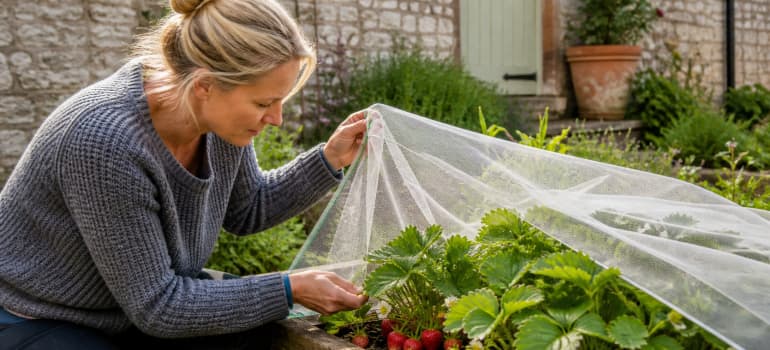
- Cloche tunnels with netting – Great for smaller beds. These are easy to lift for pollination checks and watering, then drop back down.
Keeping Insects Away
Aphids and spider mites tend to build up quietly. You often don’t notice them until there’s already a decent colony going. Regular checks under the leaves are worth making part of your routine from April onwards.
- Insect netting (fine mesh) – Your first line of defence for smaller insects. It lets through rain and most pollinators while blocking flying pests. Remove or open it during flowering so bees can get in.
- Organic insecticidal soap – Mix a dilute solution and spray directly onto affected leaves, especially the undersides. It breaks down quickly and doesn’t leave harmful residues. Repeat every few days if the problem persists.
- Soft water spray – A firm blast of water from a hose can dislodge aphid colonies. It’s surprisingly effective and costs nothing.
- Neem oil solution – A plant-derived option that disrupts insect feeding and reproduction. Works best as a preventative rather than a cure once numbers are high.
For vine weevil grubs, which attack below the soil surface, nematodes are the most effective organic option. These are microscopic parasites that you apply in water directly to the soil. Apply them in late summer or early autumn when the soil is still warm enough for them to work.
Deterring Slugs
Slugs are relentless. They’ll eat ripening fruit, young leaves, and even the crowns of plants if things are bad enough. They’re most active at night and after rain, which makes them easy to miss during daytime garden checks.
- Straw mulch – Keeps the fruit lifted off damp soil and creates a dry, scratchy barrier that slugs dislike crossing. It’s the traditional method for a reason.
- Copper tape – Applied around the rim of pots or raised beds, it gives slugs a mild deterrent. Works best in drier conditions and less reliably in wet summers.
- Wool pellets – A natural, compostable option that swells when wet and creates an uncomfortable texture for slugs. Effective and kind to the garden.
- Crushed eggshells or sharp grit – Spread around the base of plants. The jury’s still out on how effective these are, honestly. They help a little but won’t stop a determined slug.
- Nematode solution (slug-specific) – Applied to the soil, these target slugs underground. Most effective in spring and early summer before slug populations peak.
- Evening patrol – It sounds basic, but going out with a torch after dark and removing slugs by hand is genuinely one of the most effective methods. Drop them into soapy water.
The Role of Companion Planting
Companion planting is one of those techniques that gardeners either swear by or overlook entirely. The basic idea is that certain plants, when grown near strawberries, either confuse pests with their scent, attract beneficial insects, or actively repel the things you don’t want. It won’t replace netting or mulch, but as part of a broader approach it genuinely makes a difference.
The best companions for strawberries in a UK garden include:
- Marigolds (Tagetes) – Their strong scent confuses and deters aphids and other soft-bodied insects. They also attract hoverflies, which eat aphids. Plant them around the edges of your strawberry bed.
- Garlic – Interplanted between strawberry crowns, garlic is thought to deter aphids and spider mites through its pungent scent. Some gardeners also use a dilute garlic spray on the leaves.
- Chives – Another allium with a useful scent deterrent. Chives can also attract pollinators when in flower, which is a bonus during strawberry flowering season.
- Borage – A traditional strawberry companion. It attracts beneficial insects, particularly bees, and is said to improve the vigour of nearby strawberry plants. The blue flowers look lovely, too.
- Thyme – Low-growing and aromatic, thyme planted at the edges of beds can deter slugs and attract predatory insects that feed on garden pests.
- Fennel – Attracts lacewings and hoverflies that prey on aphids. Keep it a little distance away from the strawberries though, as fennel can inhibit growth in some nearby plants.
The key with companion planting is integration. A single marigold at the end of the row won’t do much. Dotting companions throughout and around the bed creates a more layered, fragrant environment that makes it harder for pests to zero in on your strawberries.
Organic and Biological Pest Control
Not a fan of chemical pesticides? That’s completely understandable, and the good news is there are genuinely effective alternatives. Organic and biological methods do take a bit more patience, but they’re safer for wildlife, better for the soil long term, and often kinder to the plants themselves.
Biological control means introducing or encouraging natural predators that keep pest populations in check. In a healthy UK garden, you may already have some of these around:
- Ladybirds – Both adults and larvae are voracious aphid predators. Encourage them by leaving a patch of wildflowers or installing a bug hotel nearby.
- Lacewings – The larvae are particularly effective against aphids and small insects. They’re attracted to flowering herbs and umbellifers like fennel or dill.
- Ground beetles – Often overlooked, these hunt slugs, slug eggs, and other soil-dwelling pests. Avoid disturbing the soil too much and they’ll stick around.
- Nematodes – Available to order and applied directly to the soil, nematodes are microscopic organisms that parasitise and kill specific pests. There are types targeted at slugs, vine weevil grubs, and leatherjackets.
On the organic remedy side, a few things are worth knowing. Dilute insecticidal soap is effective against soft-bodied insects and is safe around edible plants when used correctly. A solution of water with a few drops of washing-up liquid works in a similar way for emergency aphid removal, though proprietary formulations tend to be more consistent. Garlic spray, made by steeping crushed garlic in water and then straining it, can be used as a foliar spray to deter aphids and spider mites. It won’t eliminate them, but it makes the plant less appealing as a target.
If you’re managing a larger garden and pest pressure is consistently high, a professional garden maintenance service can handle the regular upkeep across all your beds and borders, keeping plants healthy and reducing the conditions that let pest populations build up in the first place.
Mulching Techniques for Pest Prevention
Mulching is one of those tasks that pulls double duty. Done well, it deters pests, retains soil moisture, suppresses weeds, and keeps your fruit clean and off the soil. It’s not glamorous work, but it makes a real difference by the time fruiting season arrives.
Here’s how to set up mulching effectively around your strawberry plants:
How to mulch around strawberry plants to deter pests and protect your crop.
Clear the bed first
Before applying any mulch, remove weeds, old leaf litter, and any debris where slugs or insects might be hiding. This also gives you a chance to check for slug eggs in the soil. These are small, white, pearl-like clusters. Remove and dispose of them.
Choose the right mulching material
Straw is the traditional choice for strawberries. It’s light, keeps fruit off the ground, and dries quickly after rain. Pine needles are a good alternative that slugs particularly dislike due to their texture. Avoid heavy bark chips directly around the crowns as they hold too much moisture.
Apply the mulch around (not over) the crown
Spread mulch to a depth of roughly 5–7cm around each plant, keeping it away from the crown itself. Covering the crown invites rot. You want the mulch to sit beneath the leaves and around the fruit-bearing stems so the berries rest on it rather than on bare soil.
Top up after rain
Heavy rain compresses mulch and can wash it aside. Check every couple of weeks during fruiting season and top up where needed. Straw especially tends to compact and break down through the summer, so a mid-season refresh is often necessary.
Remove mulch at the end of the season
Once fruiting finishes and you’re heading into autumn, clear the mulch away. Leaving it in place over winter creates a perfect habitat for slugs and vine weevils to overwinter in. Compost it or dispose of it, and start fresh the following spring.
Frequently Asked Questions
What are the most effective natural pest barriers for strawberries?
The most reliable natural barriers combine insect netting to block flying pests, straw or pine needle mulch to deter slugs, and companion plants like marigolds and chives to confuse and repel insects. Used together, these layers create an environment that’s consistently less attractive to common strawberry pests without needing any chemical sprays.
Can you use vinegar to protect strawberries from pests?
Diluted vinegar sprayed around the base of plants can deter some insects, including ants, and may discourage slugs from crossing treated areas. It’s not a reliable stand-alone solution and should never be sprayed directly onto leaves or fruit as it can cause damage. Used carefully as part of a wider approach, it can add a small extra layer of deterrence, but physical barriers and nematodes are considerably more effective.
Can essential oils deter strawberry pests?
Some essential oils, particularly peppermint and lavender, can help discourage certain insects when diluted in water and sprayed around plants. They won’t replace physical barriers or biological controls, but they can add an extra layer of deterrence, especially against aphids and ants. Reapply after rain, as the scent fades quickly. Always test on a small area first to check for any leaf sensitivity.
Should I remove affected leaves to control pests?
Yes, removing heavily infested or damaged leaves can slow the spread of pests and reduce the habitat available to them. It’s particularly useful for aphid control. Cutting off leaves with large colonies before they spread to new growth is quicker and often more effective than spraying. Dispose of the leaves away from the garden rather than composting them.
Are strawberries in pots easier to protect from pests than those in beds?
In some ways, yes. Pots are easier to move, and copper tape around the rim is more effective at deterring slugs than in an open bed. You also have more control over the growing medium. However, pots can dry out quickly, which increases spider mite risk, and birds will still target them. A combination of copper tape, careful positioning, and netting gives container strawberries good overall protection.
Keep your strawberry plants and garden healthy all season
Enter your postcode to view our rates and availability in your area.
For questions about the services we offer visit our main site
Conclusion
Strawberries will always be attractive to pests. That’s just the nature of growing something sweet and low to the ground. But with the right combination of physical barriers, companion planting, mulch, and biological controls, you can tip the balance firmly in your favour. None of these methods require a huge amount of effort once they’re set up, and most of them cost very little.
The key is to start early, layer your defences, and check in regularly rather than waiting for the damage to appear. Get those habits in place before the fruit starts forming and you’ll be far more likely to end up with a harvest worth picking.