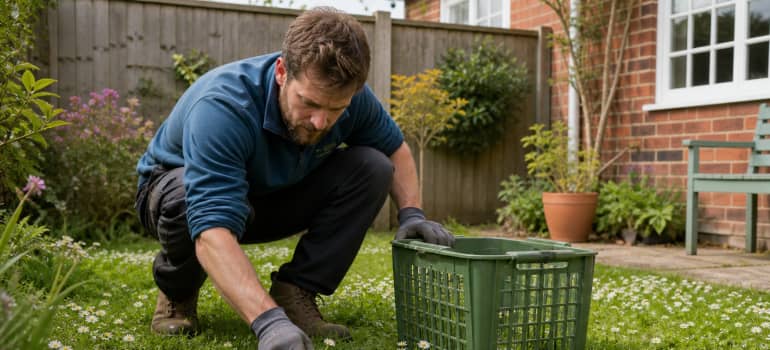
There’s something almost sweet about a lawn dotted with little white daisies catching the morning light. For about five minutes. Then you notice they’ve taken over the entire front patch, and your pristine green lawn is looking more like a wildflower meadow you didn’t sign up for. If you’re wondering how to get rid of daisies in your lawn without going to war with the whole garden, you’re in the right place.
The good news is there are real, workable options. Some are quick, some take patience, and some work best when you combine them. This post walks through all the main strategies so you can pick what suits your lawn, your time, and your conscience when it comes to the local bees.
 Add to Preferred Sources
TL;DR
- Daisies thrive in compacted, nutrient-poor soil, fixing the soil tackles the root cause.
- Manual removal with a daisy grubber works well in smaller patches but needs to get the whole root.
- Selective herbicides can target daisies without harming your grass.
- Daisies support pollinators, so consider whether partial management suits your garden better.
- Regular fertilising and overseeding help grass outcompete daisies over time.
- Mulching creates a physical barrier that slows daisy re-establishment.
- Avoid removing daisies mid-bloom, act earlier in the season for better results.
Table of Contents
How Do You Get Rid of Daisies in a Lawn?
You can get rid of daisies in a lawn by combining manual removal, selective herbicide treatment, and soil improvement. For small patches, hand-pulling with a daisy grubber is the most direct method. For larger infestations, a selective broadleaf herbicide applied in spring or autumn will clear them without damaging your grass. Improving your lawn’s soil health is what stops them from coming back.
Let’s break each method down properly, because the right approach really does depend on how widespread the daisies are, how much time you have, and whether you want a chemical-free solution or just the fastest result.
Here are the main removal methods worth knowing about:
- Manual Removal – A daisy grubber or narrow hand fork lets you work individual plants out of the ground, roots and all. It’s fiddly work, honestly, but it’s satisfying when you get a whole rosette out in one go. Effective for small areas, but you need to be thorough. Any root left behind will just regrow.
- Selective Herbicide – Products formulated for broadleaf weeds will target daisies while leaving your grass untouched. Apply when the lawn is actively growing, typically spring or early autumn, and follow the label instructions carefully. It usually takes a couple of weeks to see results.
- Soil Health Improvement – Daisies love poor, compacted soil. Aerating your lawn, correcting a low soil pH, and feeding your grass regularly all make the conditions far less welcoming for them. It’s a slower fix but arguably the most important one.
- Natural Remedies – Vinegar or salt solutions get mentioned a lot online, and they can scorch daisy foliage. But they’re non-selective, meaning they’ll damage your grass too. They also don’t kill the roots, so regrowth is likely. Use these with real caution, and only in very targeted spots as a last resort.
For most lawns, the best approach is to start with manual removal for visible rosettes, follow up with a selective herbicide if needed, then work on the lawn’s overall health so the grass can fill in the gaps and crowd out future seedlings.
How to manually remove daisies from a lawn, roots and all, using a daisy grubber.
Choose the right time
Early spring is ideal, before daisies flower and set seed. The soil tends to be slightly moist after winter, which makes extraction easier. Avoid doing this during a dry spell when the ground is hard. You’ll just snap the stems and leave the roots behind.
Loosen the soil around each plant
Push a daisy grubber or narrow hand fork into the soil about 3–5cm from the base of the rosette. Work around the plant in a small circle to loosen the root system before you try to lift it. Rushing this step is where most people go wrong.
Extract the whole root
Lever the plant upward steadily while holding the base of the rosette. The goal is to get the whole root out in one piece. Daisies have a more stubborn root system than you’d expect for such a small plant, so be patient and keep the angle low to the ground as you pull.
Dispose of the plants properly
Don’t compost daisies that are flowering or close to it, as the seeds can survive and spread through your compost heap. Bag them up for green waste collection instead. Roots only? They can go on the compost pile safely.
Reseed the bare patches
Any gaps left behind are an open invitation for new daisy seeds to settle in. Lightly scratch the exposed soil, sprinkle some lawn grass seed appropriate for your soil type, and water it gently. This step is easy to skip but really does make a difference.
Why Are Daisies Taking Over My Lawn?
Daisies spread quickly in lawns where the soil is compacted, low in nutrients, or slightly acidic. These are conditions where grass struggles but daisies genuinely thrive. In other words, your daisies aren’t a problem in themselves. They’re a symptom of what’s going on underneath.
It’s a bit like how dandelions show up in neglected verges. The plant isn’t evil; it’s just very good at filling a gap. Daisies are opportunistic. They move in when grass is weak, sparse, or stressed.
Compacted soil is a big one. When soil is packed down hard, grass roots can’t penetrate deeply enough to stay robust. Daisies, with their low-growing rosettes, don’t need as much. They settle right in at the surface and get on with it.
Low soil fertility plays a role too. Grass needs a decent supply of nitrogen to grow thick and lush. When it doesn’t get that, it thins out. Thin grass means gaps. Gaps mean daisy seeds find bare soil to germinate on, and once they establish, they can spread through both seed and creeping lateral growth.
Mowing too short also gives daisies a leg up. Scalped grass is weakened grass. The daisy rosette sits flat to the ground and largely escapes the blades, while the grass around it takes the hit. If your lawn looks like a putting green, you might be inadvertently giving daisies the advantage.
Should You Remove All Daisies, or Is There an Ecological Argument for Keeping Some?
Not necessarily. Daisies are genuinely useful for pollinators, particularly bees and hoverflies, especially in early spring and again in autumn when other flower sources are scarce. If you have a few scattered across your lawn rather than a full-blown takeover, letting some remain isn’t a bad choice at all.
The real question is what you actually want from your lawn. A formal, perfectly uniform grass surface and a wildlife-friendly space are both valid goals, just different ones. Neither is wrong.
That said, if daisies are genuinely crowding out your grass in significant patches, management becomes necessary even from an ecological standpoint. A lawn that’s mostly daisy rosettes isn’t serving the grass, the soil structure, or even the biodiversity it promises, since dense daisy patches eventually exclude other plants too.
A middle-ground approach works well for a lot of people. Manage the heaviest concentrations, let a few persist at the lawn edges, and you get the best of both. Pollinators still visit, your lawn looks respectable, and you’re not spending every weekend on your hands and knees.
How to Prevent Daisies from Coming Back
Once you’ve cleared a daisy outbreak, the last thing you want is to repeat the whole process next season. Prevention really does come down to making the lawn an environment where grass wins and daisies can’t get a foothold.
- Regular Fertilising – Feed your lawn in spring and again in early autumn with a lawn feed suited to the season. Well-nourished grass grows thick and dense, leaving very little room for daisy seeds to germinate. It’s one of the most reliable preventive steps there is.
- Proper Mowing Height – Keep your mower blades at a height that suits your grass type, typically no shorter than 3–4cm for most UK lawns. Taller grass shades the soil surface, which makes it harder for daisy seeds to germinate and establish.
- Aeration – Hollow-tine or solid-tine aeration once a year, usually in autumn, reduces compaction and dramatically improves drainage. When grass roots can breathe and spread properly, they grow thick enough to outcompete most weeds, including daisies.
- Overseeding – Scatter lawn grass seed over thin or patchy areas in spring or autumn. Filling in the gaps with grass means there’s nowhere left for daisy seeds to land and take hold. It’s simple, cheap, and genuinely effective.
- Mulching – In border areas adjacent to your lawn, mulching creates a physical barrier that stops weed seeds, including daisy seeds, from reaching the soil. It also retains moisture for the plants you actually want to thrive.
It’s worth saying that none of these steps are a one-time fix. Lawn care is an ongoing thing. But once you get into a rhythm with feeding and mowing properly, the daisy problem tends to become far more manageable season by season.
If staying on top of all this feels like a lot, a professional lawn care service handles regular upkeep year-round, from feeding and scarifying to tackling problem patches before they get out of hand.
Frequently Asked Questions
When is the best time of year to treat daisies in a lawn?
Early spring is the ideal window for most methods. The daisies are actively growing but haven’t yet flowered or set seed, so you can remove or treat them before they spread. Autumn is also a good time for herbicide application, as the lawn is still growing but the season’s main daisy flush is over. Avoid treating in midsummer heat or during winter dormancy.
What does a professional lawn care service actually do?
A professional lawn care service handles the full range of ongoing lawn maintenance, including feeding, scarifying, aeration, overseeding, and targeted weed treatments. They use products and equipment not always available to home gardeners, and they can assess underlying soil issues that drive recurring weed problems. It’s a good option if DIY efforts haven’t produced lasting results.
Will daisies die off on their own if I improve my lawn care?
In some cases, yes. If you improve soil fertility, aerate regularly, and overseed sparse patches, your grass will gradually outcompete the daisies over one or two growing seasons. It won’t happen overnight, and very established plants may need manual removal first, but better lawn care alone can significantly reduce daisy numbers without any herbicide.
Is it necessary to remove daisies from every lawn?
Not at all. This comes down to personal preference. If you want a formal, uniform grass surface, daisies need managing. But if you’re happy with a looser, more relaxed lawn aesthetic, a small population of daisies isn’t harmful and can genuinely benefit local pollinators. Many gardeners choose to manage the worst patches and leave the rest.
Do daisies spread quickly once they’re established?
They can, yes. Lawn daisies (Bellis perennis) spread both through seed and by producing new rosettes from the base of the plant. In a lawn that isn’t mown regularly or fed well, a single plant can expand into a noticeable patch within a season. Acting early, before flowering, is the most effective way to stay ahead of the spread.
Get your lawn looking its best all year round
Enter your postcode to view our rates and availability in your area.
For questions about the services we offer visit our main site
Conclusion
Getting rid of daisies in your lawn isn’t a single action. It’s a combination of removing what’s there, treating the conditions that invited them, and keeping your grass healthy enough to hold its ground. Manual removal, selective herbicide, aeration, overseeding, none of these is a silver bullet on its own, but together they genuinely work.
If the daisies have been there a while, be realistic about the timeline. You’re not undoing a season’s worth of spread in an afternoon. Work at it steadily, improve the soil, fill the gaps with grass seed, and by the following season you should have a lawn that looks far more like what you’re after.