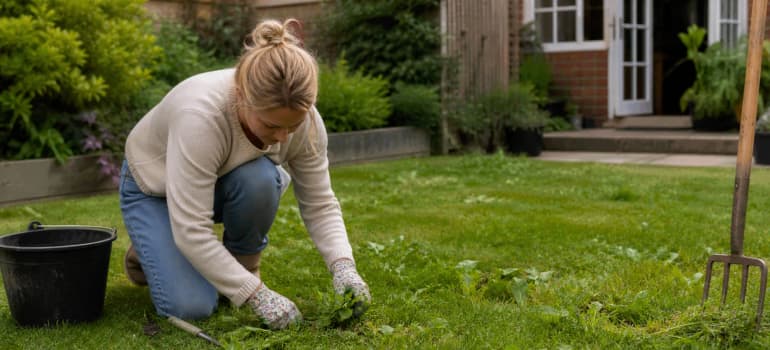
There’s nothing quite like looking out at your garden and seeing a sea of green, only to realise half of it isn’t grass. Weeds have a knack for moving in quietly and setting up shop before you’ve even noticed. If your lawn has gone from lush to a patchwork of dandelions, clover, and who-knows-what-else, you’re definitely not alone. The UK’s mild, damp climate is basically a five-star hotel for weeds.
The good news? A weed-covered lawn isn’t a lost cause. It takes a bit of persistence, but with the right approach, you can genuinely turn things around. This guide covers how to identify what you’re dealing with, how to get rid of it effectively, and how to stop it coming back.
TL;DR
- Identifying your specific weed types is the essential first step before choosing any control method.
- Manual removal works well for light infestations, but chemical or integrated approaches are needed for heavy ones.
- Selective herbicides are the most reliable solution for a lawn full of weeds, applied during active weed growth.
- Seasonal lawn care, including aeration, feeding, and correct mowing height, is what stops weeds coming back.
- Overseeding bare patches after weed removal helps close the gaps weeds would otherwise exploit.
- Natural remedies like vinegar have real limitations on lawns and can damage grass if misused.
- A consistent, integrated plan combining multiple methods delivers the best long-term results.
Table of Contents
How to Get Rid of a Lawn Full of Weeds in the UK
The most effective approach for a heavily weeded UK lawn is to combine selective herbicide treatment with improved lawn maintenance. Apply a selective broadleaf herbicide during the growing season (April to September), then follow up with overseeding, feeding, and regular mowing to help grass outcompete any returning weeds. No single method alone will deliver lasting results.
If your lawn is genuinely full of weeds, the honest answer is that one quick fix probably isn’t going to cut it. The weeds you’re seeing above ground are just the visible part. Many have deep roots, some spread by runners, and others have already dropped seeds that are sitting in the soil waiting for a chance. So the plan needs to address what’s there now, and what’s coming next.
For most UK lawns with widespread weed coverage, a selective herbicide is the sensible starting point. These products are specifically designed to kill broadleaf weeds without harming grass. After the weeds die back, you’ll likely be left with bare patches, which need to be overseeded quickly or new weeds will move straight back in. That’s the cycle that trips most people up.
Manual removal alone is really only practical for small patches or isolated weeds. If you’re trying to hand-pull your way through a lawn that’s fifty per cent dandelions, you’ll exhaust yourself, miss roots, and be doing the same thing again in a month. It’s worth being realistic about that from the start. Once you’ve got the initial infestation under control, maintaining a healthy, weed-resistant lawn is significantly less work than fighting weeds every season.
Which Weeds Are Taking Over Your Lawn?
Before reaching for any treatment, identify exactly what you’re dealing with. Different weeds behave differently, spread differently, and often signal specific problems with your soil or lawn conditions. Treating the weed without knowing what caused it usually means it comes back.
Take a slow walk across your lawn and see which of these you recognise.
- Dandelion – Those familiar yellow flowers are hard to miss, but it’s the deep taproot that’s the real problem. Break it and the plant regrows. You need to remove the full root or use a targeted herbicide.
- White clover – Low-growing and spreading, clover forms dense patches that crowd out grass. It thrives in lawns with low nitrogen levels and is a sign your lawn may be underfed.
- Broadleaf plantain – Wide, ribbed leaves that lie flat and smother the grass beneath them. It tolerates compacted soil well, which means it often appears in high-traffic areas.
- Creeping buttercup – Spreads rapidly via runners and tends to thrive in damp, poorly drained soil. Glossy leaves and small yellow flowers make it fairly distinctive.
- Yarrow – Feathery, fern-like leaves and a creeping growth habit. It’s tough and drought-resistant, which makes it persistent even in lawns that are otherwise well maintained.
- Selfheal – A low, mat-forming plant with small purple flowers in summer. Common in fine lawns and often a sign the grass is being cut too short.
- Lesser trefoil – Looks similar to clover but has smaller leaves and yellow flowers. Often mistaken for clover and equally common in nitrogen-poor soils.
- Moss – Technically not a weed, but it competes with grass and thrives in shady, damp, or compacted conditions. A lot of moss usually points to an underlying lawn health issue rather than just a surface problem.
Getting this identification right actually matters. Clover tells you to feed your lawn more. Broadleaf plantain tells you to aerate. If you treat the weed without addressing the underlying cause, it’ll just come back. The weeds are often symptoms as much as problems.
What’s the Most Effective Way to Get Rid of Lawn Weeds?
There’s no single method that works for every lawn or every situation. The best results usually come from matching the approach to how bad the problem is and what types of weeds are involved. Here’s a clear breakdown of what’s available to you.
Manual Removal
Manual removal is genuinely satisfying for small patches, and there’s something to be said for it. The key rule is simple: you need to get the root out. For dandelions, that means using a long-handled weeding tool to work down alongside the taproot before levering it out. Just pulling the leaves off does almost nothing.
Always weed when the soil is moist, ideally after rain. Dry, compacted ground makes root removal much harder. Once you’ve pulled a weed, pop some fresh topsoil in the gap and overseed it quickly, otherwise something else will fill the space. The most common mistake? Leaving the roots behind and wondering why the same weed is back in two weeks.
Chemical Treatments
For a lawn that’s heavily infested, selective herbicides are the most reliable option. These target broadleaf weeds while leaving grass largely untouched, which makes them genuinely suitable for lawn use. They work best when applied during active weed growth, typically between April and September when temperatures are consistently above 10°C.
Apply on a calm, dry day with no rain forecast for at least 24 hours. Wind can carry the spray onto neighbouring plants, so calm conditions matter. You’ll usually see weeds yellowing and dying back within two to three weeks. Some stubborn weeds may need a second application. Always read the label carefully and keep children and pets off the lawn until it’s fully dry. It’s not complicated, but it does need doing properly.
Natural Solutions
Not a fan of chemistry? Fair enough, lots of people aren’t. The honest truth about natural remedies on lawns, though, is that they come with real limitations. Vinegar and boiling water are genuinely effective at killing weeds, but they’re non-selective. They’ll take out whatever they touch, including the grass around the weed. So they’re practical for weeds in paving cracks or paths, but risky business on a lawn.
If you do want to use them on the lawn, spot-treat individual weeds very carefully with a small container rather than a spray. Even then, expect some grass damage around the treated area. These methods work best as part of a broader strategy rather than a standalone solution for a heavily weeded lawn. They’re not going to clear a field of dandelions, but they can help with the odd stubborn plant in a specific spot.
How Do You Stop Weeds Coming Back Each Season?
Preventing weeds from returning is largely about keeping your grass healthy and dense throughout the year. A thick, well-fed lawn leaves very little room for weeds to establish. Each season has specific tasks that, done consistently, make a real difference to long-term weed resistance.
The idea isn’t to add endless work to your weekends. It’s about doing the right things at the right time so the lawn does the heavy lifting itself. A strong, vigorous lawn is genuinely the best weed prevention there is.
| Season | Key Tasks | Why It Helps | |
|---|---|---|---|
| Spring (March–May) | Scarify, aerate, apply pre-emergent treatment, first feed of the year | Removes moss and thatch that suppresses grass; opens soil for nutrients; feeds grass before weeds get established | |
| Summer (June–August) | Mow regularly at 4–5cm, spot-treat weeds with herbicide, water during dry spells | Taller grass shades out weed seedlings; active growth period maximises herbicide effectiveness | |
| Autumn (September–November) | Overseed bare patches, apply autumn feed, aerate compacted areas | Fills gaps before weeds can colonise; low-nitrogen autumn feeds strengthen roots without encouraging leafy weed growth | |
| Winter (December–February) | Avoid heavy foot traffic, check drainage, clear debris | Reduces compaction and waterlogging that favour weeds like creeping buttercup in spring |
One point worth highlighting: mowing height is something a lot of people underestimate. Cutting grass too short weakens it and lets light reach weed seeds at soil level, which encourages germination. Keeping the mower blade at around 4 to 5cm during summer makes a genuinely noticeable difference to how many new weeds appear.
If you’d rather hand the seasonal upkeep over to someone else, a professional lawn care service takes care of everything your garden needs throughout the year, from feeding and scarifying to aeration and overseeding, so your outdoor space stays in good shape whatever the season.
Putting It All Together: Your Weed Management Plan
So you’ve identified your weeds, you know the methods available, and you’ve got a sense of what to do each season. Now it’s time to pull it all together. An integrated approach simply means you’re not relying on one method alone, but combining them in the right order for the best results.
How to develop and implement an integrated lawn weed management plan that delivers lasting results.
Assess your lawn and identify the weeds
Walk your entire lawn and take stock of what weeds are present, how widespread they are, and whether they’re concentrated in particular areas. Note any patterns, such as weeds clustered in shaded spots or compacted pathways, as this will help you address underlying causes alongside the weeds themselves.
Address any underlying soil or drainage issues
If you’ve spotted that certain weeds are linked to compaction or poor drainage, deal with those conditions first. Aerate compacted areas using a garden fork or hollow-tine aerator. Improving the growing conditions gives your grass a fighting chance once the weeds are cleared.
Apply the appropriate treatment for your infestation level
For light infestations, hand-weed using a suitable tool and remove as much root as possible. For moderate to heavy infestations, apply a selective broadleaf herbicide during the growing season. Follow label instructions carefully and plan for potentially two applications if weeds are particularly stubborn.
Overseed bare patches after weeds die back
Once treated weeds have died and been removed, you’ll likely have bare patches. Lightly rake the area, apply fresh topsoil, and overseed with a grass mix suited to your lawn type. Keep the area moist until the new grass establishes. This step is critical — skip it and weeds will simply colonise the gaps again.
Feed your lawn to strengthen the grass
Apply an appropriate seasonal feed to encourage thick, healthy grass growth. A well-fed lawn is genuinely the best long-term barrier against weeds. In spring, use a high-nitrogen feed to boost growth. In autumn, switch to a low-nitrogen formulation that strengthens roots rather than promoting leafy top growth.
Monitor and adjust your approach over time
Check your lawn every few weeks and spot-treat any weeds that reappear. Keep notes on what worked, what didn’t, and where weeds are re-emerging. Adjust your maintenance routines accordingly. Weed control isn’t a one-time event, it’s an ongoing process that gets easier as the lawn strengthens.
Frequently Asked Questions
What is the best time to apply weed killer to a UK lawn?
The best time is during the active growing season, between April and September, when weeds are taking up nutrients readily and temperatures are consistently above 10°C. This ensures maximum absorption and effectiveness. Avoid applying during drought, frost, or before heavy rain, as these conditions reduce uptake and can spread the product beyond the intended area.
Are there lawn weeds that indicate soil health issues?
Yes, several common weeds are useful indicators. Creeping buttercup and rushes suggest waterlogged or poorly drained soil. Broadleaf plantain and annual meadow grass often signal compaction. White clover and lesser trefoil typically appear in nitrogen-deficient lawns. If you treat these weeds without addressing the underlying conditions, they’ll almost certainly return.
Can overseeding really help reduce weed problems long-term?
Absolutely, and it’s one of the most underused tools in lawn care. A dense lawn physically prevents weed seeds from reaching the soil surface and getting the light they need to germinate. Overseeding bare patches after weed treatment closes the gaps that new weeds would otherwise colonise. It’s not a quick fix, but it builds genuine long-term resilience.
How do I know if my lawn is too far gone to save?
Unless your lawn is more than 75% weeds with virtually no grass remaining, it’s usually worth treating rather than replacing. If there’s a reasonable amount of grass still present, selective herbicide treatment combined with overseeding can restore it significantly over one or two seasons. Only if the lawn is overwhelmingly bare and weed-dominated would a full renovation or returfing be worth considering.
Is it safe to let children and pets back on the lawn after herbicide treatment?
Most selective herbicides are safe for children and pets once the product has fully dried, which typically takes a few hours depending on weather conditions. Always check the specific product instructions, as guidance varies. As a precaution, keep everyone off the lawn until it’s completely dry and, where possible, treat in sections so part of the lawn remains accessible.
Get your weed-free lawn sorted by the professionals
Enter your postcode to view our rates and availability in your area.
For questions about the services we offer visit our main site
Conclusion
Getting rid of a lawn full of weeds in the UK isn’t a one-afternoon job, but it’s absolutely achievable. The key is combining the right treatment for your current weed problem with the kind of consistent, seasonal lawn care that builds genuine resistance over time. Tackle the weeds, fill the gaps, feed the grass, and keep at it through the seasons.
The lawns that stay weed-free aren’t the ones that got sprayed once and forgotten. They’re the ones that get a bit of regular attention. Start with what you can manage, stay consistent, and your lawn will do the rest.