Evergreens remind us of winter, fresh scents and the Christmas holidays. One of the fastest-growing and long-lasting evergreen trees in the UK is the Norway spruce (its botanical name is Picea abies), which, although not native to the UK, is highly widespread in the country.
Due to its traditional green needles, conical shape and pine scent, many people like the idea of growing Norway spruce in pots or directly in their gardens and making it into their Christmas tree when the festive season comes. Moreover, this evergreen tree variety comes at affordable pricing.
If you don’t have experience in growing evergreen trees, you may be wondering how to plant and care for a Norway spruce yourself. Or you simply feel like you don’t know all there is to know and you want to make sure you are taking care of your plant the proper way. Read on — we’ve put together everything you need.
TL;DR
- Norway spruce (Picea abies) is the UK’s most common Christmas tree species, reaching 30–40m at maturity
- It grows 60–90cm per year and can live 300–400 years in open ground
- Plant in full sun or partial shade; needs at least 6 hours of direct sunlight daily
- Prefers moist, well-drained, slightly acidic soil (pH 4.5–6.0); tolerates loamy, clay, and sandy types
- Seeds should be cold-stratified for 3 weeks before sowing; germination takes 1–3 weeks at around 24°C
- Most common diseases are Rhizosphaera needle cast and Cytospora canker — both are fungal and largely preventable
- Space trees 120–180cm apart for windbreaks; 72–96cm for Christmas tree plantations
Table of Contents
Norway Spruce characteristics
Since Prince Albert introduced the old German custom to decorate Norway spruce trees for Christmas, this tree variety has become popular on the British Isles. To help you understand the specifications of growing a Norway spruce and familiarise yourself with its appearance so that you can tell it apart from other evergreens, we have put together some of the key characteristics of Norway spruce trees.
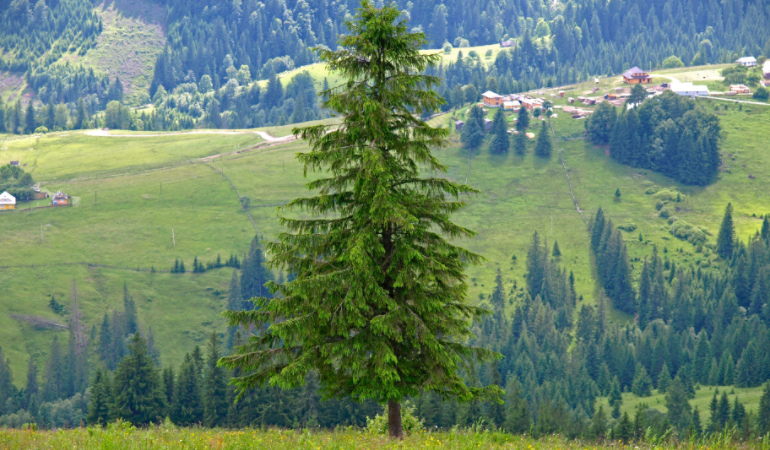
- Growth rate and mature size: The Norway spruce tree grows at a medium to fast rate, adding approximately 60–90cm to its height each year. It is the fastest-growing tree of spruces, and it can reach up to 30–40m in height and 7–10m in width.
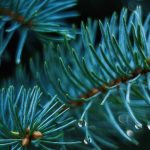
- Needles and fruits: The needles are square-shaped, approximately 1–2.5cm in length, green in colour and release a rich, sweet scent. This needle length is one of the most reliable features for telling Norway spruce apart from similar species such as Sitka spruce. After pollinating, female flowers turn into long, diamond-shaped cones that hang down on the branches and have overlapping red-brown scales.
- Norway spruce tree’s lifespan: Norway spruce can live for up to 300–400 years, although if grown in a pot, its lifespan is usually shorter, a maximum of 100 years. It takes from 50 to 80 years for the tree to reach its mature state.
- Wildlife value: One of the benefits of growing a Norway spruce is its high wildlife value. It is the natural habitat of various species, such as beetles, hoverflies and weevils, as well as owls, hawks, and some songbirds. This evergreen tree serves as a shelter for deer, hare, grouse and woodcock. The foliage is food for the caterpillars of several moth species, while red squirrels favour the cones.
How to grow Norway spruce from seeds
With its symmetrical shape and gorgeous dark green foliage, the Norway spruce is aesthetically pleasing and can make a beautiful feature of your garden. It can be easily propagated from seeds, which can sprout quickly. However, it’s essential to know that they are vulnerable to bacteria and fungi, and they must be kept in the proper condition.
How to propagate a Norway spruce tree from seed, from cone collection through to planting out.
Collect the cones
Collect cones in early to mid-autumn, once they turn light brown but before they split open. Place collected cones in a dry area for about 2 weeks so seeds fall off naturally.
Cold-stratify the seeds
Place seeds in sealable bags and refrigerate for 3 weeks. Then soak in water for 24 hours to soften the seed coat. Discard any seeds that float — these are non-viable.
Sow into deep pots
Fill deep pots with sand-based, well-draining compost. Sterilise the pot with a 10% bleach solution and optionally dust seeds with fungicidal powder. Sow at approximately 6mm (¼ inch) depth.
Maintain germination conditions
Keep pots in a cool, shaded position. Water to a depth of 7.5cm (3 inches) only if no rain has fallen for more than two weeks. Germination typically occurs within 1–3 weeks once daytime temperatures reach around 24°C.
Pot on and plant out
Grow saplings in pots for their first two seasons, moving to a pot 2.5–5cm (1–2 inches) larger each season. Keep in light shade during the hottest part of the day and water at least once weekly. In their second autumn, plant out into a permanent bed in sandy, slightly acidic soil with the trunk base 2.5–5cm above the soil line.
Norway Spruce planting process
Transplanting a Norway spruce tree is a relatively straightforward process, even if this is your first time doing it. For bare-root trees, autumn is generally the best time to plant, as the cooler conditions help roots establish before growth resumes in spring. Container-grown trees can go in at any frost-free point in the year. Before beginning, ensure the location is appropriate for growing this evergreen beauty. Think about spacing, access to light, drainage and soil. Once this is settled, it’s time to get down to work. Here is our step-by-step guide on how to plant Norway spruce:
- Dig a large hole, preferably twice the size of the nursery pot or the tree’s root system.
- Take the tree out of its pot, along with the surrounding soil. If the pot is made of plastic, cut it away to avoid pulling at the trunk.
- Dampen the roots and set them into the hole, ensuring the trunk is standing straight.
- Pack the soil in by tamping it down around the roots to avoid the creation of air pockets that can dry out the roots.
- Water the plant.
How far apart should Norway Spruce trees be planted?
Norway spruce can grow swiftly and become very tall if given space to do so. The recommended planting distance depends on whether the tree will be used as a Christmas tree or a windbreak. For windbreaks, 120–180cm of distance should be enough; for Christmas tree plantations, 72–96cm is the standard spacing.
Don’t plant the tree too close to a building, sidewalk or road. Considering that Norway spruce can reach a width of 7–10m, allow enough open space for your tree to grow freely.
Sun and soil preference
This evergreen tree grows in a variety of conditions. However, it thrives when in full sun or partial shade. Do not plant the spruce in a full-shade location, as it requires at least 6 hours of direct sunlight per day.
The soil, where you will plant your Norway spruce, has to be rich, moist, yet well-drained and slightly acidic (ideally pH 4.5–6.0). The tree does well in loamy, clay and sandy soils.
Water requirements
Norway spruce is a hardy tree that doesn’t require much maintenance once established. However, it is not a drought-tolerant plant. Young trees need adequate watering, which has to be more frequent, especially during hot, dry spells. Well-established trees require very little care. Nevertheless, deep water during the summer months or when you notice that the soil is on the dry side.
Fertiliser
After the planting of a young tree, mild, slow-acting fertiliser can be beneficial for the plant during the initial growing season. Established Norway spruce trees don’t have any special fertiliser needs, but if you want to make sure the soil is rich and fertile enough, you can feed your plant with fertiliser twice a month during early spring and once a month during the summer period.
Never fertilise just before winter when the tree slows down its growth rate.
How to look after your Norway Spruce tree?
Norway spruce makes a good Christmas tree, but you can still implement some habits to ensure your tree stays healthy and robust. Here is some helpful information that we suggest you follow:
- Each spring spread a layer of mulch 5cm away from the tree trunk and at a radius of 10cm.
- During the summer, it is recommended that you water the tree extensively once a week, until mid-August. You can place a soaker hose around the tree and run it for at least 1 hour.
- Once you notice new growth in spring, begin applying a 20-20-20 fertiliser (a balanced liquid or granular feed), following the instructions on the back of the product.
- Conduct regular inspections for mite infestation. The spruce spider mite (Oligonychus ununguis) is very difficult to see, but you might notice yellowing at the base of the older needles. To get rid of the pests, use insecticidal soap or a commercial miticide.
Diseases
This beautiful evergreen tree can be affected by several diseases. The ones that aren’t as common are Stereum (decay fungi), Heterobasidion (root rot), and Elatobium (green spruce aphid). On poorly-drained sites, Phytophthora root rot (Phytophthora spp.) is also worth watching for, particularly given the UK’s wet conditions — ensuring good drainage at planting is the most effective prevention.
The most common ones are Rhizosphaera needle cast and Cytospora canker. Both of these commonly occur because of tree fungus growth, however, their symptoms are different.
The common symptoms of Cytospora canker disease are:
- Yellow or orange spots on the trunk’s surface.
- Oozing liquid from pimple-looking bumps.
Rhizosphaera needle cast negatively affects Norway spruce’s foliage. The tree gives the following hints if it suffers from this illness:
- In late summer or early autumn, its needles can become purple-brown.
- You will also notice that the needles start falling rapidly.
Preventative and treatment tips
Taking proper care of your trees significantly reduces the risk of diseases. Also, regular inspections make you identify diseases soon, which can save a tree’s life. When an illness affects a tree, it weakens it, worsening its condition.
The ways to prevent stress on Norway spruce trees are the following:
- Make sure you don’t overwater it.
- Prevent trunk damage by keeping a reasonable distance from the tree when you mow the lawn or trim weeds.
- As a preventative measure, spray the tree with fungicide twice a year. This will significantly reduce the chance of Cytospora canker disease and Rhizosphaera needle cast infecting Norway spruce because the fungus will die before it sets in.
When those diseases infect the tree, the best practices are to:
- Clean exposed areas and cuts with a fungicide.
- Prune infected branches and remove dead bark.
- Disinfect your tools with chlorine when you finish working on the tree. This will prevent the disease from spreading.
Frequently Asked Questions
Is Norway spruce the same as a Christmas tree?
Norway spruce (Picea abies) is the traditional Christmas tree species and remains the most widely sold cut Christmas tree in the UK. Its classic conical shape, dark green needles, and pine scent are the reference point for the modern Christmas tree. However, it drops needles faster than alternatives such as Nordmann fir (Abies nordmanniana), which is now the most popular non-drop species.
How fast does a Norway spruce grow per year?
Norway spruce grows at a medium to fast rate, typically adding 60–90cm of height per year under good conditions. It is the fastest-growing of the true spruce species commonly grown in the UK.
Can you keep a Norway spruce in a pot long-term?
Yes, though its lifespan is reduced compared to open-ground planting. In a pot, Norway spruce typically lives up to 100 years rather than the 300–400 years possible in the ground. The key is repotting into a progressively larger container each season and ensuring consistent watering, since pot-grown trees are far more vulnerable to drought stress.
Why is my Norway spruce dropping needles?
Needle drop has several causes. Indoors, low humidity, heat from radiators, and insufficient water are the most common triggers. Outdoors, rapid needle drop combined with purple-brown discolouration in late summer or autumn may indicate Rhizosphaera needle cast, a fungal disease. Yellowing at the base of older needles can signal spruce spider mite (Oligonychus ununguis) infestation. Check the specific symptoms against the disease and care sections above to identify the cause.
Get a beautiful Norway Spruce tree delivered by Fantastic Gardeners with just a click!
Enter your postcode to view our rates and availability in your area.
For questions about the services we offer visit our main site
Looking to buy a young Norway spruce?
If after reading this article, you feel excited about buying yourself a new living Norway spruce tree for the upcoming Christmas holidays, consider booking a delivery. Fantastic Gardeners offers pot-grown 2-3ft Norway spruce trees, which can be delivered right to your home by a friendly team of gardeners.
After the end of the holidays, the expert gardeners can also help you with transplanting the tree into a larger pot or right into your garden. For a sustainable and authentic Christmas, order pot-grown Norway spruce and book a delivery date that will suit your schedule.
***
Have you got any questions or suggestions for us? Share them in the comments section below. We would love to hear from you!
Image source: Shutterstock / Roden Wilmar